
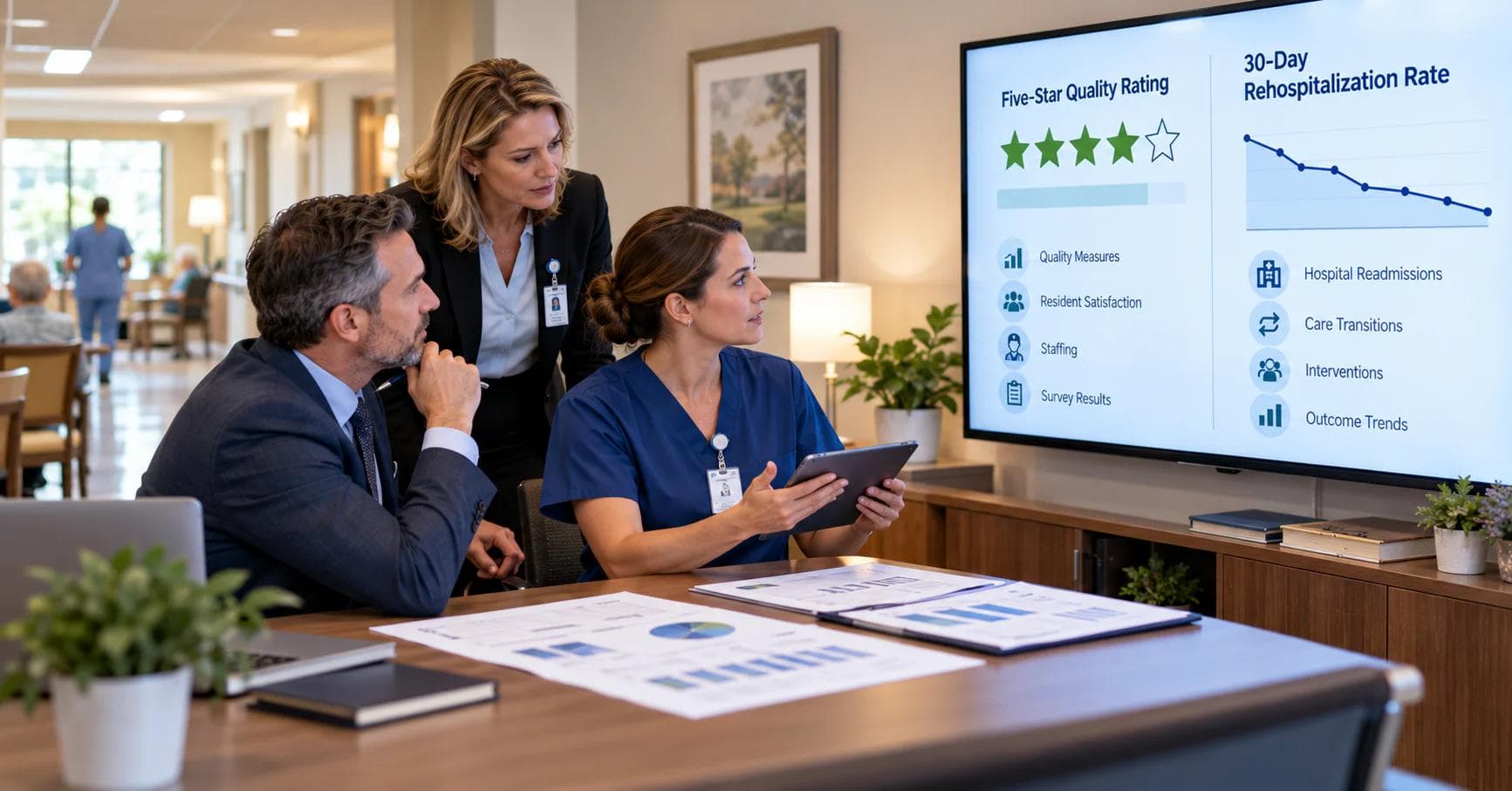
Skilled nursing facilities are one of the most demanding B2B accounts in healthcare. They operate on thin margins, under chronic staffing shortages, inside a near-constant survey-and-certification cycle, and under payment rules that reward getting the clinical picture exactly right. A vendor who shows up with a feature list and a price gets nowhere. A vendor who shows up with a credible answer to rehospitalization, staffing strain, or survey risk gets a meeting.
This playbook covers what an SNF is and how it gets paid, who makes the buying decision, what skilled nursing facilities actually value, where deals stall, and the sales motion that wins post-acute accounts compliantly.
What an SNF is - and how payment shapes buying
A skilled nursing facility provides short-term, Medicare-covered rehabilitation and skilled care after a hospital stay, alongside longer-term nursing care. Under Medicare, SNFs are paid through the SNF Prospective Payment System using the Patient-Driven Payment Model (PDPM), which ties reimbursement to each resident's clinical characteristics rather than therapy volume - see the CMS SNF payment system.
That payment design shapes purchasing. Because reimbursement follows clinical acuity and accurate assessment, SNFs value anything that improves documentation accuracy, prevents costly rehospitalizations, or reduces the labor cost of care. Products that cannot connect to one of those outcomes compete only on price - the weakest position in a low-margin setting.
Who makes the buying decision
SNF buying committees combine facility leadership with corporate oversight when the building is part of a chain:
- Administrator / executive director - the economic buyer, accountable for margin, census, and survey results.
- Director of nursing (DON) - owns clinical quality, staff workflow, and adoption; your most important champion.
- Medical director - clinical authority on protocols and new interventions.
- MDS coordinator - owns the resident assessments that drive PDPM reimbursement and quality measures.
- Corporate / regional leadership and procurement - for chains, regional VPs or corporate purchasing often control contracts and standardization.
Who holds the pen depends heavily on whether the facility is independent or part of a multi-facility operator, which should be the first thing you qualify.
What skilled nursing facilities actually value
Winning SNF pitches answer the pressures leadership is measured on:
- Fewer rehospitalizations. Readmissions hurt quality scores, referral relationships, and value-based performance. Anything that keeps residents stable in-building is a priority.
- Staffing relief. The workforce shortage is existential; solutions that save nursing time or reduce reliance on agency staff get attention fast.
- Survey and compliance readiness. A bad survey is a financial and reputational event. Tools that reduce deficiency risk sell themselves.
- A better Five-Star rating. SNF quality is public on Medicare Care Compare, and ratings influence referrals from hospitals and families - part of broader CMS nursing-home quality oversight.
- Census and referral quality. Because SNFs depend on hospital and physician referrals, anything that strengthens referral relationships supports the top line.
Where SNF sales cycles stall
SNF deals stall for structural reasons. In chains, a facility champion may love your product but lack authority - corporate standardization and procurement control the contract. Capital is tight, so anything requiring upfront spend faces scrutiny against payback period. Staff turnover can quietly kill adoption after the sale, so your implementation plan is part of your pitch. And survey timing can freeze decisions for weeks. Qualify the decision structure and the budget reality early, and build adoption support into the offer.
Mid-article CTA
Need help building your healthcare growth engine?
Medix helps healthcare startups, clinics, pharma companies, and provider-focused platforms build scalable commercial pipelines.
Book a Strategy CallA sales motion that wins SNF accounts
Treat SNF selling as a repeatable motion, the same discipline Medix applies to selling to hospitals:
- Segment chain vs. independent. Map target facilities by operator; for chains, identify the regional and corporate decision layer before investing in a single building.
- Lead with the pressure you relieve. Open on rehospitalization, staffing, or survey risk - quantified - not on features.
- Win the DON and the administrator. You need a clinical champion (DON) for adoption and the economic buyer (administrator or corporate) for budget.
- Prove it in one building. Run a low-burden pilot with pre-agreed success metrics the operator can replicate.
- Scale across the operator. Use the pilot result to standardize across the chain's facilities - where the real revenue is.
- Connect to the referral network. Position your solution within the hospital-to-SNF and discharge-planning and SNF-to-home-health flow; referral partners notice vendors who make transitions smoother.

Grow SNF business within Anti-Kickback rules
SNF care is largely federally reimbursed and tightly connected to hospitals, physicians, and home-health agencies through referrals, which puts SNF selling inside federal fraud-and-abuse law. The Anti-Kickback Statute prohibits offering anything of value to induce referrals or purchases of federally reimbursed services - see the OIG summary of the fraud and abuse laws. Structure pricing and any co-marketing or referral-adjacent arrangements to compete on genuine value, and have counsel review anything that touches referral relationships.
Measure what moves SNF revenue
- Win rate and cycle length by operator type (independent vs. chain) and by region.
- Documented outcome delivered - rehospitalization reduction, nursing hours saved, or deficiency risk reduced.
- Expansion rate from pilot building to additional facilities in the operator.
- Strength of referral-partner relationships influenced by your solution.
Frequently asked questions
How do you sell to a skilled nursing facility? Qualify whether the facility is independent or part of a chain, lead with a quantified answer to rehospitalization, staffing, or survey risk, win both the director of nursing and the administrator (or corporate procurement for chains), pilot in one building, then standardize across the operator - all within Anti-Kickback rules.
Who is the decision-maker at an SNF? The administrator or executive director is the economic buyer; the director of nursing owns clinical adoption; the MDS coordinator and medical director influence clinical and reimbursement decisions; and for chains, regional or corporate procurement often controls the contract.
What do skilled nursing facilities care about most? Reducing rehospitalizations, relieving staffing pressure, staying survey-ready, protecting their Five-Star rating on Medicare Care Compare, and maintaining strong referral relationships and census.
Why is selling to SNFs hard? Thin margins, chronic staffing shortages, chain procurement that overrides facility champions, tight capital, and survey cycles that pause decisions. The sellers who win connect directly to the outcomes leadership is measured on.
Becoming the vendor SNFs rely on
Skilled nursing facilities reward vendors who understand their pressures: tie your product to fewer rehospitalizations, less staffing strain, or lower survey risk; earn both the DON and the administrator; prove it in one building; and scale across the operator - compliantly. That turns a single facility into a chain-wide channel and a durable post-acute presence.
Medix Outreach builds and runs the commercial motion that wins post-acute and long-term-care accounts. To open SNF accounts faster, book a free strategy call or explore our Healthcare Commercial Growth & Go-to-Market service.