
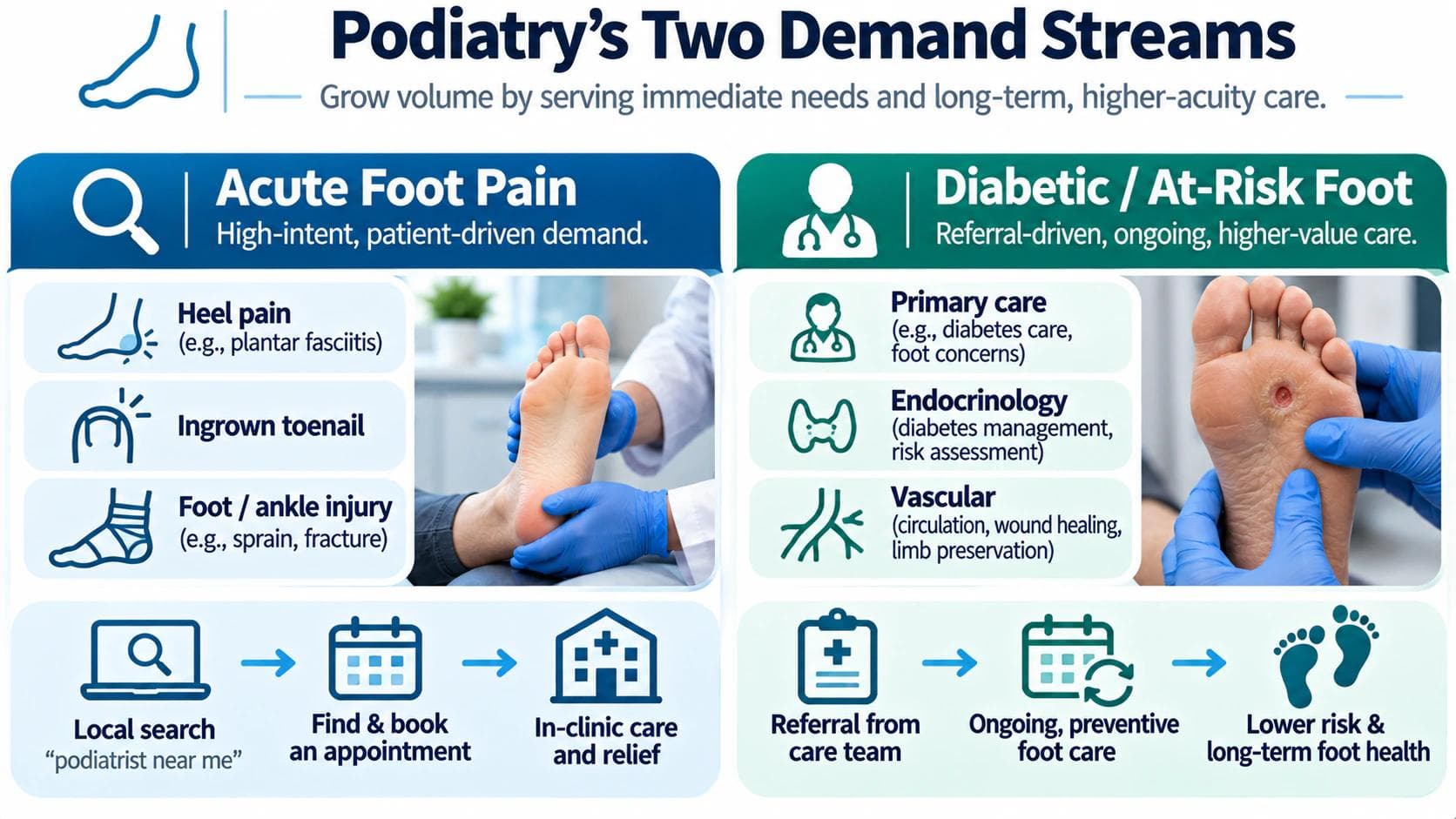
Podiatry marketing works best when it treats the practice as two businesses at once. One is acute and consumer-driven: a patient with heel pain, an ingrown toenail, or a sudden injury searches online and books with whoever is closest, soonest, and best reviewed. The other is chronic and referral-driven: diabetic-foot and at-risk patients who arrive from primary care, endocrinology, and vascular, and who return for care over years. The marketing motions for each are different, and practices that build only one leave real growth on the table.
This guide covers how to win high-intent foot-pain searches, how to build the diabetic-foot referral relationships that produce recurring volume, and how to keep chronic patients engaged so the economics compound.
Win the acute foot-pain search
A large share of podiatry demand starts with a person in discomfort searching for help nearby. These are high-intent searches by people ready to book, and capturing them is mostly local search and credible condition content.
- Own local search per location. An accurate Google Business Profile, strong location pages, and real reviews decide which podiatrist a searcher picks. Keep providers, services, and hours accurate per Google's guidelines.
- Build condition pages that match intent. Heel pain, bunions, ingrown toenails, plantar fasciitis, sports injuries: clear, credible pages that answer the patient's question earn rankings and increasingly feed AI answers. Usefulness and trust beat cleverness.
- Remove booking friction. A patient in pain will choose the practice that offers a prompt appointment and easy online scheduling over one that makes them call and wait.
Build the diabetic-foot referral engine
The durable, recurring half of podiatry is at-risk-foot care, and it arrives by referral. Primary care, endocrinology, and vascular manage large panels of patients with diabetes who need preventive and ongoing podiatric care. Those referral relationships produce volume that recurs for years and matters more in value-based arrangements, where preventing complications is the goal.
- Target the right referrers. Primary care groups, endocrinology, and vascular practices are the highest-yield sources for at-risk-foot referrals. Map who sends patients, who could, and who has stopped.
- Run outreach as a program. Consistent contact, fast scheduling for referred patients, and clear report-backs are what keep referrals flowing, the same discipline behind any physician liaison program.
- Lead with the referrer's goal. For diabetic-foot care, that goal is preventing complications and keeping shared patients healthy; framing your outreach around outcomes, not your services, is what earns durable referrals and prevents referral leakage.
Retention is a growth lever, not an afterthought
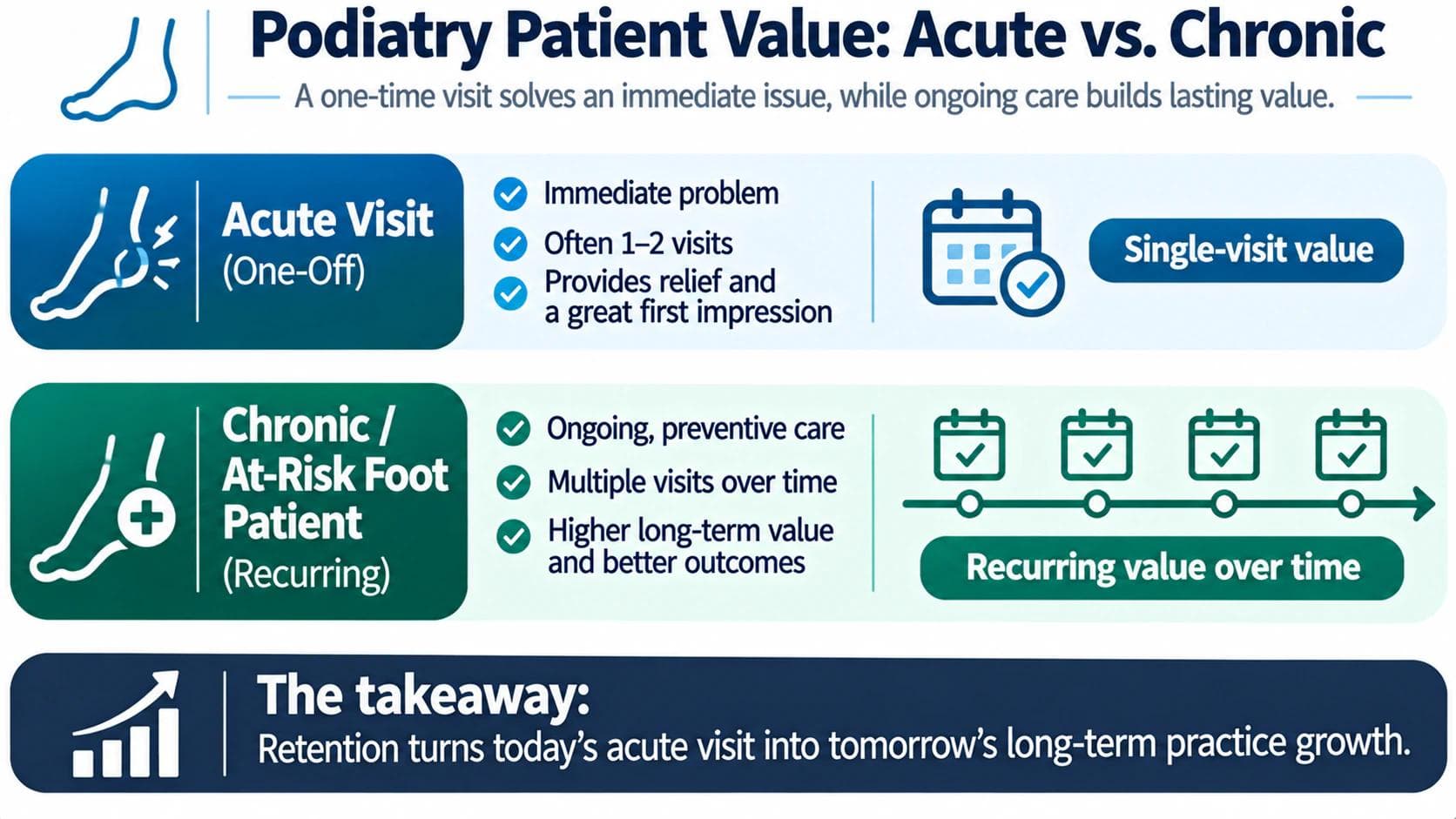
Chronic podiatry patients are among the most valuable in the practice because they return. Marketing that only chases new acute visits, while chronic patients quietly lapse, leaves the most durable revenue unprotected.
- Recall and reactivation. Routine recall for at-risk-foot patients protects both outcomes and revenue.
- Reactivate past acute patients. A prior heel-pain or injury patient with a new issue is your cheapest new visit.
Reputation converts both streams
Whether a patient arrives by search or referral, reviews and reputation decide whether they book and stay. Generate reviews as a routine across providers and locations, respond professionally to criticism, and keep any outcome claims and testimonials truthful and substantiated under the FTC's health-products guidance.
Mid-article CTA
Need help building your healthcare growth engine?
Medix helps healthcare startups, clinics, pharma companies, and provider-focused platforms build scalable commercial pipelines.
Book a Strategy CallMeasure what matters
- New patients by source (acute search vs. referral) and the referral mix across primary care, endocrinology, and vascular.
- Cost per booked acute visit by channel.
- Chronic-patient recall and retention, the recurring-revenue signal.
- Reputation metrics per provider and location.
Compliance guardrails
- Keep claims and reviews honest under FTC standards.
- Protect patient data in pixels, retargeting, and intake forms per HHS HIPAA guidance.
- Use credible clinical references. The American Podiatric Medical Association is a useful starting point for accurate condition content.
Frequently asked questions
What is the best way to market a podiatry practice?
Run two motions. Capture acute foot-pain demand with local search, credible condition pages, and easy booking. Build the diabetic-foot referral engine with targeted outreach to primary care, endocrinology, and vascular. Then protect the economics with recall and reactivation of chronic and past patients.
How do podiatrists get more referrals?
Target primary care, endocrinology, and vascular; run outreach as a consistent program; schedule referred patients quickly; and report outcomes back. Framing outreach around preventing complications for shared diabetic patients is what earns durable referrals.
Does local SEO matter for podiatry?
Yes. Much acute podiatry demand starts with a local search by someone in pain, so an accurate Google Business Profile, strong location and condition pages, and real reviews directly drive bookings.
Why is retention important in podiatry marketing?
Chronic, at-risk-foot patients return for years and are among the most valuable in the practice. Recall and reactivation protect that recurring revenue and improve outcomes, often at lower cost than acquiring new acute patients.
Growing a podiatry practice on two engines
Podiatry growth comes from winning the acute foot-pain search and building the diabetic-foot referral engine, then keeping chronic patients engaged so the value compounds. Practices that run both motions deliberately stop depending on a single channel and build durable, recurring volume.
Medix Outreach helps podiatry practices build patient-acquisition for acute demand and the provider referral development that produces recurring diabetic-foot volume. See how positioning accelerates clinic adoption in our provider-positioning case study.