GLP-1 medications have transformed the healthcare market.
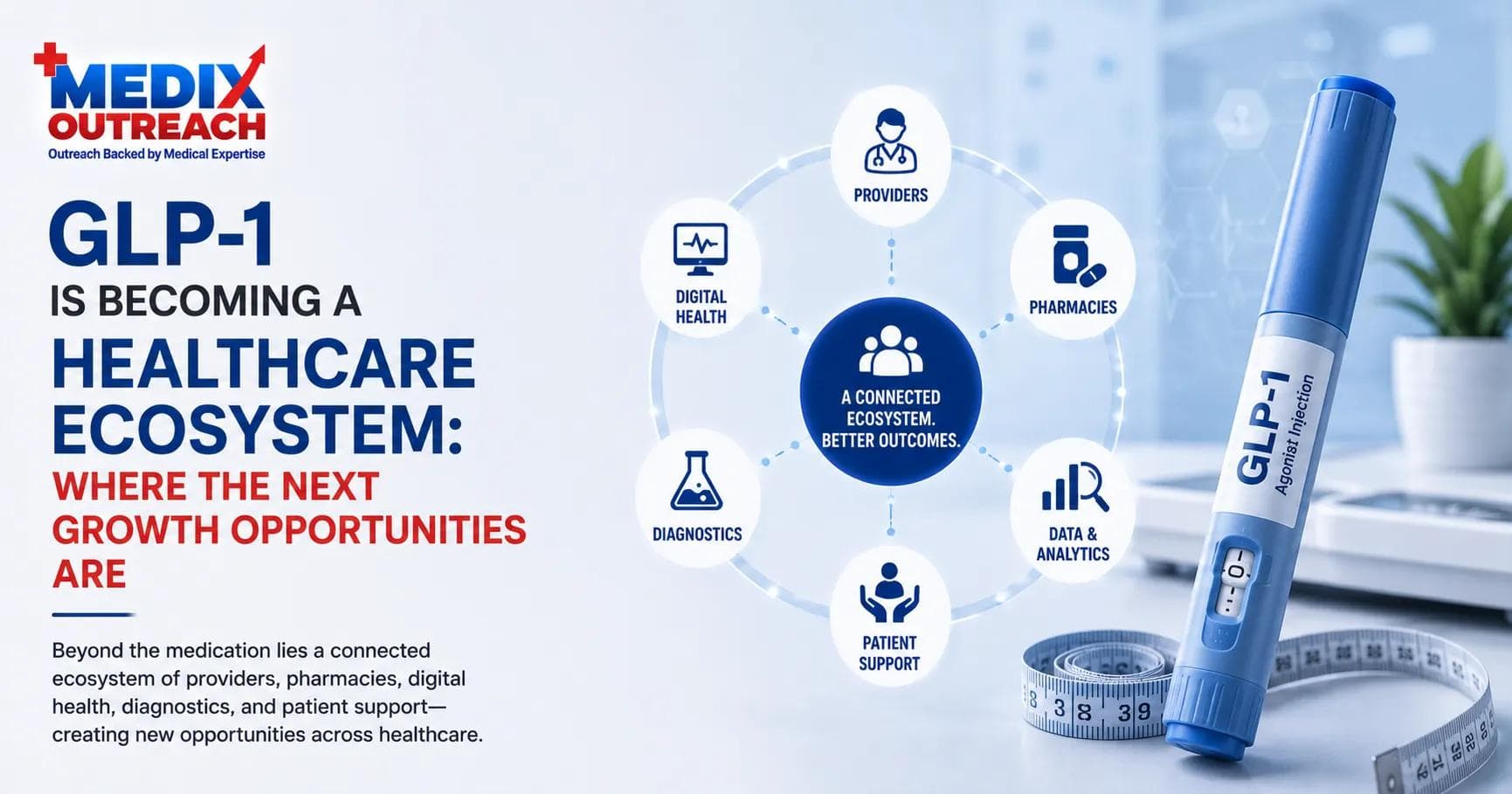
What started as a major pharmaceutical opportunity has expanded into a much broader ecosystem involving physicians, obesity clinics, pharmacies, digital health companies, diagnostics providers, employers, patient support services, and healthcare technology.
The commercial opportunity is no longer limited to selling the medication.
The real opportunity is everything that happens around it.
In August 2026, the market continues to expand and diversify. Novo Nordisk's CEO recently described obesity treatment as an increasingly broad market rather than a winner-take-all competition, while competition is expanding into oral GLP-1 treatments.
GLP-1 Has Changed More Than Weight Management
The growth of GLP-1 therapies has created new healthcare business models.
Providers need systems to manage growing patient populations.
Clinics need patient acquisition strategies.
Pharmaceutical companies need provider engagement.
Digital health companies need differentiated services.
Pharmacies need efficient fulfillment.
Employers and payers need strategies for managing costs and coverage.
This creates a connected commercial ecosystem.
The Provider Opportunity
GLP-1 therapies require more than a prescription.
Patients may need:
- Initial assessment
- Ongoing monitoring
- Medication management
- Lifestyle support
- Lab testing
- Follow-up appointments
- Long-term weight management
That creates opportunities for healthcare providers and technology companies that can support the broader patient journey.
For medical practices, the commercial opportunity is not simply offering a GLP-1 prescription.
It is building a comprehensive obesity-care service.
The Pharma Opportunity Is Expanding
The pharmaceutical market is becoming increasingly competitive.
Companies are competing on:
- Efficacy
- Safety
- Dosing
- Administration
- Patient convenience
- Pricing
- Access
- Provider adoption
The emergence of oral options adds another dimension.
Recent developments in the UK show the competitive shift toward oral obesity treatments, with Eli Lilly's Foundayo becoming the second GLP-1 receptor agonist pill cleared there.
For pharmaceutical companies, this makes provider engagement increasingly important.
Provider Outreach Will Matter More as Competition Increases
When a market is small, awareness can create demand.
When a market becomes crowded, differentiation becomes essential.
Pharmaceutical and healthcare companies need provider outreach strategies that communicate meaningful clinical and patient value.
Generic product messaging will struggle to stand out.
Providers need relevant information about:
- Patient selection
- Treatment considerations
- Clinical evidence
- Patient support
- Access
- Workflow implications
Commercial teams need to understand the provider's environment rather than simply deliver promotional messaging.
Mid-article CTA
Need help building your healthcare growth engine?
Medix helps healthcare startups, clinics, pharma companies, and provider-focused platforms build scalable commercial pipelines.
Book a Strategy CallThe Medical Practice Opportunity
The growth of GLP-1 therapies is also creating opportunities for medical practices.
Obesity care can become a broader service line that includes:
- Patient education
- Clinical monitoring
- Nutrition support
- Diagnostics
- Follow-up care
- Medication management
- Long-term wellness programs
For practices, this requires more than advertising.
It requires medical practice growth strategy, patient acquisition, operational planning, and provider-centered marketing.
The Risk of Chasing the Trend Without a Healthcare Strategy
GLP-1 demand is attracting companies from outside traditional healthcare.
That creates opportunity, but also risk.
Companies entering the market need to understand:
- Regulatory boundaries
- Clinical responsibility
- Provider relationships
- Patient expectations
- Product positioning
- Market competition
Recent legal action around alleged sales of unapproved retatrutide products demonstrates the regulatory risks surrounding the rapidly expanding obesity market.
Commercial growth in healthcare cannot be separated from compliance and clinical credibility.
The Next Opportunity Is the Ecosystem
The biggest winners may not be companies selling the therapy itself.
They may be companies supporting the ecosystem around it.
Potential growth areas include:
- Obesity care platforms
- Patient engagement
- Diagnostics
- Provider networks
- Clinical monitoring
- Pharmacy services
- Digital health
- Patient support
- Healthcare analytics
- Provider referral networks
This creates a major opportunity for healthcare business development.
How Medix Outreach Can Support GLP-1 Companies
Medix Outreach helps healthcare and pharmaceutical organizations build commercial relationships across the U.S. healthcare market.
Our pharmacist-led approach combines pharma business development, provider outreach, healthcare commercialization, healthcare go-to-market strategy, healthcare market expansion, and revenue pipeline development.
For companies operating in obesity care, pharmaceuticals, diagnostics, digital health, or healthcare services, the goal is not simply to enter the GLP-1 conversation.
It's to identify where the business can create sustainable value.
Conclusion
GLP-1 is no longer simply a pharmaceutical category.
It is becoming an ecosystem.
As treatment options expand and competition increases, commercial success will depend on how effectively companies connect products and services with providers, patients, pharmacies, and healthcare organizations.
The next phase of the GLP-1 market will be defined by ecosystem development.
For companies that understand healthcare commercialization, that creates significant opportunities for growth.