
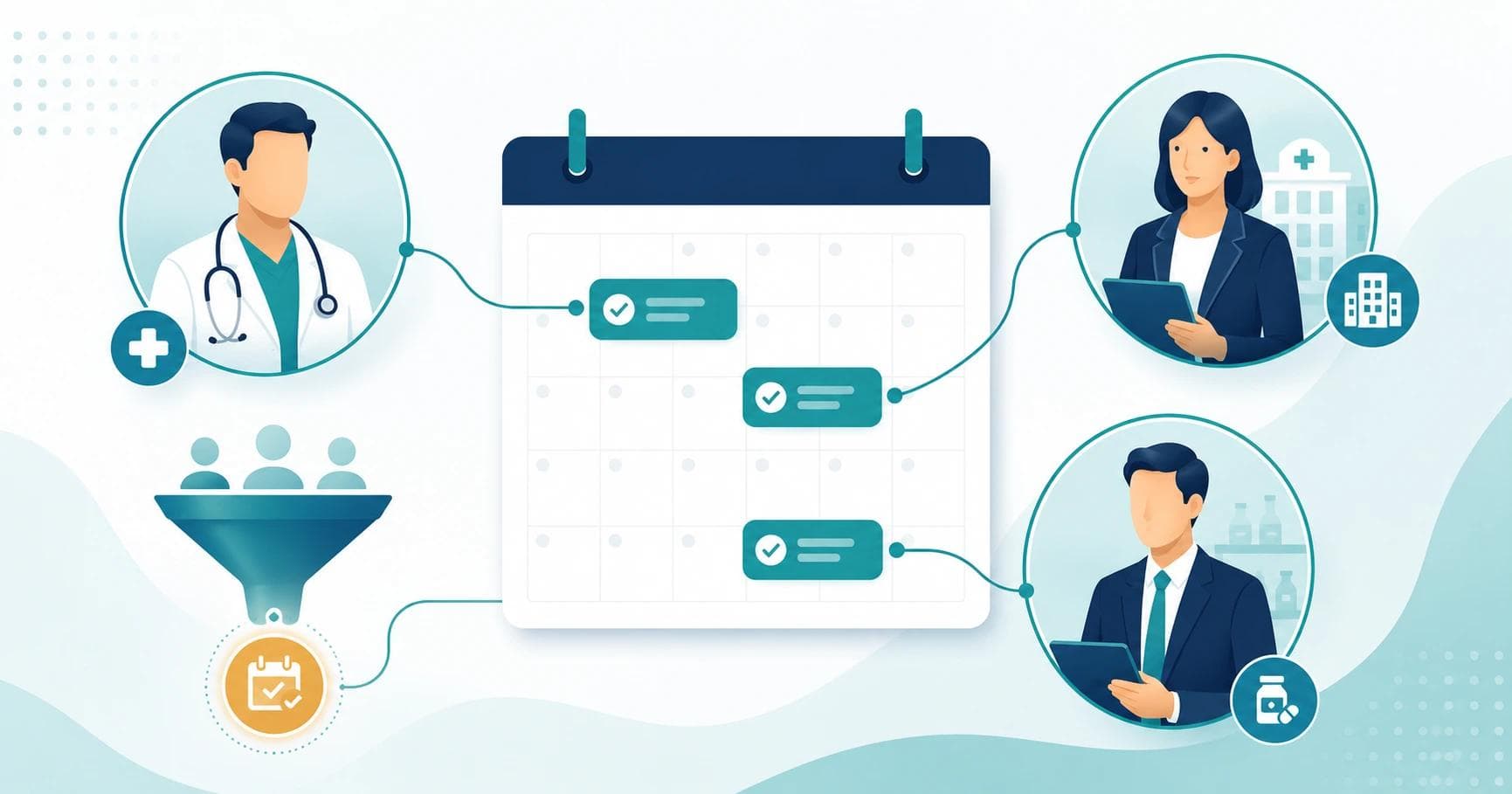
You have a product that works and buyers who should want it. What you do not have is a full calendar of qualified meetings with the providers, health systems, or pharma teams who can actually say yes. That gap is where most healthcare growth plans stall.
The instinct is to hire. Post a job for a sales development rep, wait, ramp them, and hope the pipeline follows. In healthcare, that path is slower and riskier than founders expect. Reps who understand clinical language and the way health systems buy are rare, expensive, and hard to manage well if you have never run a sales development function before.
This article is about the other path. It explains what healthcare appointment setting actually is, why booking meetings with clinical and economic buyers is harder than generic B2B, and how an outsourced sales development function can build qualified pipeline without you standing up a team from scratch. It also covers how to tell a good partner from a bad one, and how to measure the work so you fund meetings that convert, not dials that go nowhere.
What a healthcare SDR function actually does
A sales development rep, sometimes called a BDR or business development rep, sits at the top of the sales process. Their job is not to close. Their job is to start real conversations with the right people and hand a qualified, interested buyer to the person who closes. In healthcare, that person on the receiving end is often a founder, a clinical lead, or a senior account executive.
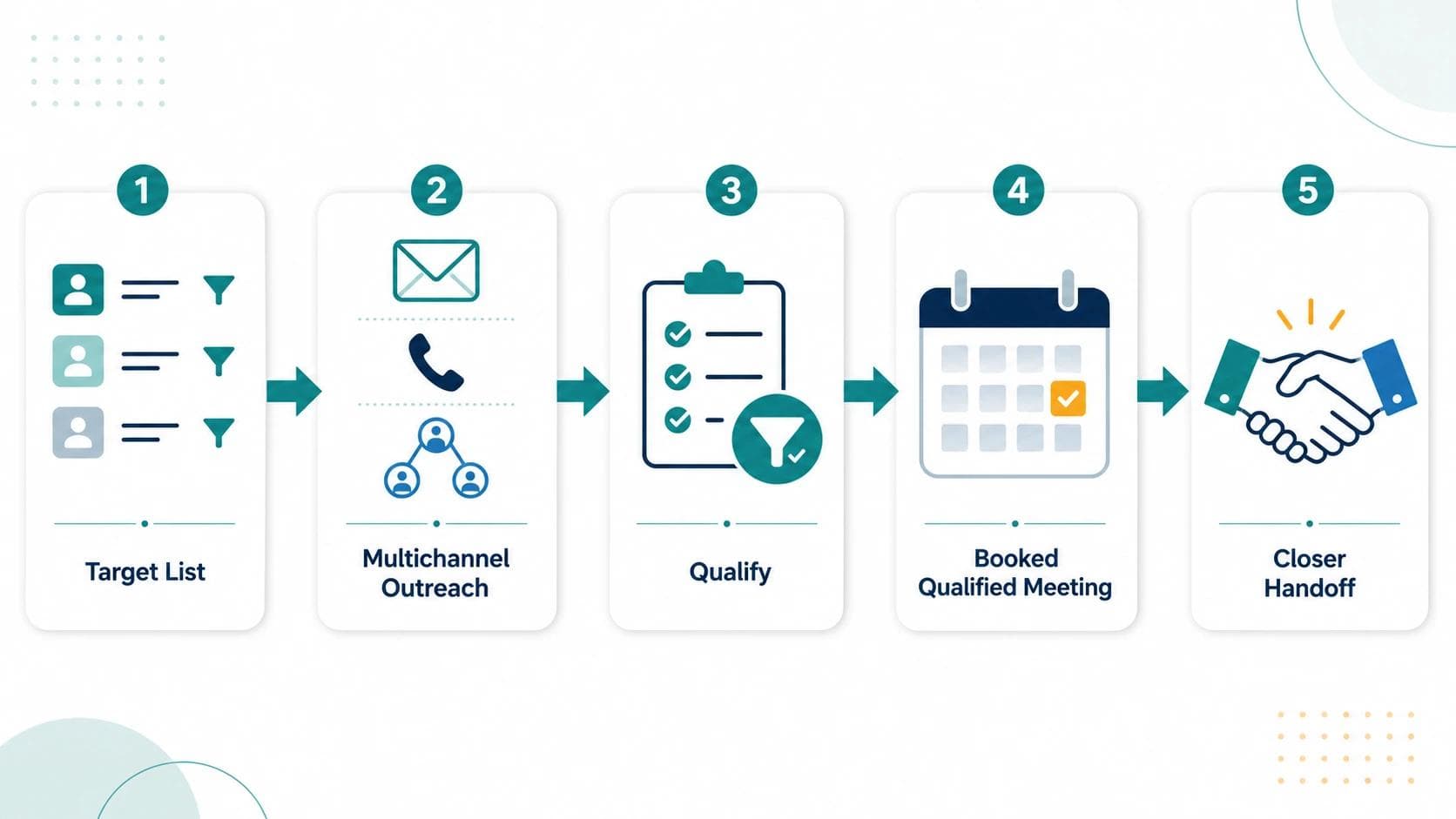
The core work breaks down into a few concrete tasks. Build and refine a target list of accounts and named contacts. Reach those contacts across the channels they actually use. Handle the first objections and the gatekeepers. Confirm that the person is a fit and genuinely worth your closer's time. Then book the meeting and make sure it happens.
Appointment setting is the output of that function. When people say "healthcare appointment setting," they usually mean the booked, confirmed meeting with a qualified buyer. But the meeting is only as good as the work in front of it. A meeting booked with the wrong person, or booked by pressuring someone who was never a fit, costs you more than an empty slot.
Done well, this is a specialized craft. The rep has to sound like someone who belongs in a healthcare conversation, ask the right qualifying questions, and protect the closer's calendar from noise. That combination of outreach skill and clinical fluency is what makes healthcare sales development hard to staff.
Why booking meetings in healthcare is harder than generic B2B
Selling into healthcare is not a bigger version of a normal B2B sale. The people you need to reach are busy clinicians and cautious administrators who are wary of vendors by default, and several forces stack against you before anyone has even considered your product.
Gatekeepers are real and they are good at their jobs. A physician's time is protected by schedulers, office managers, and clinical staff whose entire role includes keeping vendors out. In a health system, the person with budget authority sits behind layers of committee and procurement. Generic outreach dies at the front desk.
Credibility is the price of entry. A clinical or economic buyer decides in the first few seconds whether the person contacting them understands their world. If your outreach reads like it was written by someone who has never set foot in a clinic, you are done. This is why so much cold outreach fails in healthcare - not because the channel is wrong, but because the message signals that the sender does not belong. It is also why the phone still works when it is used by someone who sounds credible, a point we make in the case for cold calling in healthcare sales.
Buying cycles are long and involve many people. A hospital rarely buys because one person likes your product. It buys when clinical value, economics, risk, and workflow all make sense to a group at the same time. Sales cycles often run many months to more than a year. That length changes what your SDR function is for: not a fast close, but starting the right conversations early and keeping them warm.
Compliance shapes every touch. How you handle contact data, what you can say in a message, and how you follow up all sit inside rules, HIPAA, CAN-SPAM, and TCPA among them, that most generic SDR shops have never thought about. A partner who does not understand this creates risk while they chase meetings.
Put those together and you get the real reason healthcare pipeline is hard: the first meeting is a high-trust event, and trust is hard to manufacture at scale with people who do not know the space.
What a "qualified meeting" should actually mean
The fastest way to waste money on appointment setting is to leave "qualified" undefined. If a meeting counts the moment someone agrees to a call, you will get a full calendar and an empty pipeline. Your closers will spend their weeks with people who were curious, polite, or cornered, and none of it will turn into revenue.
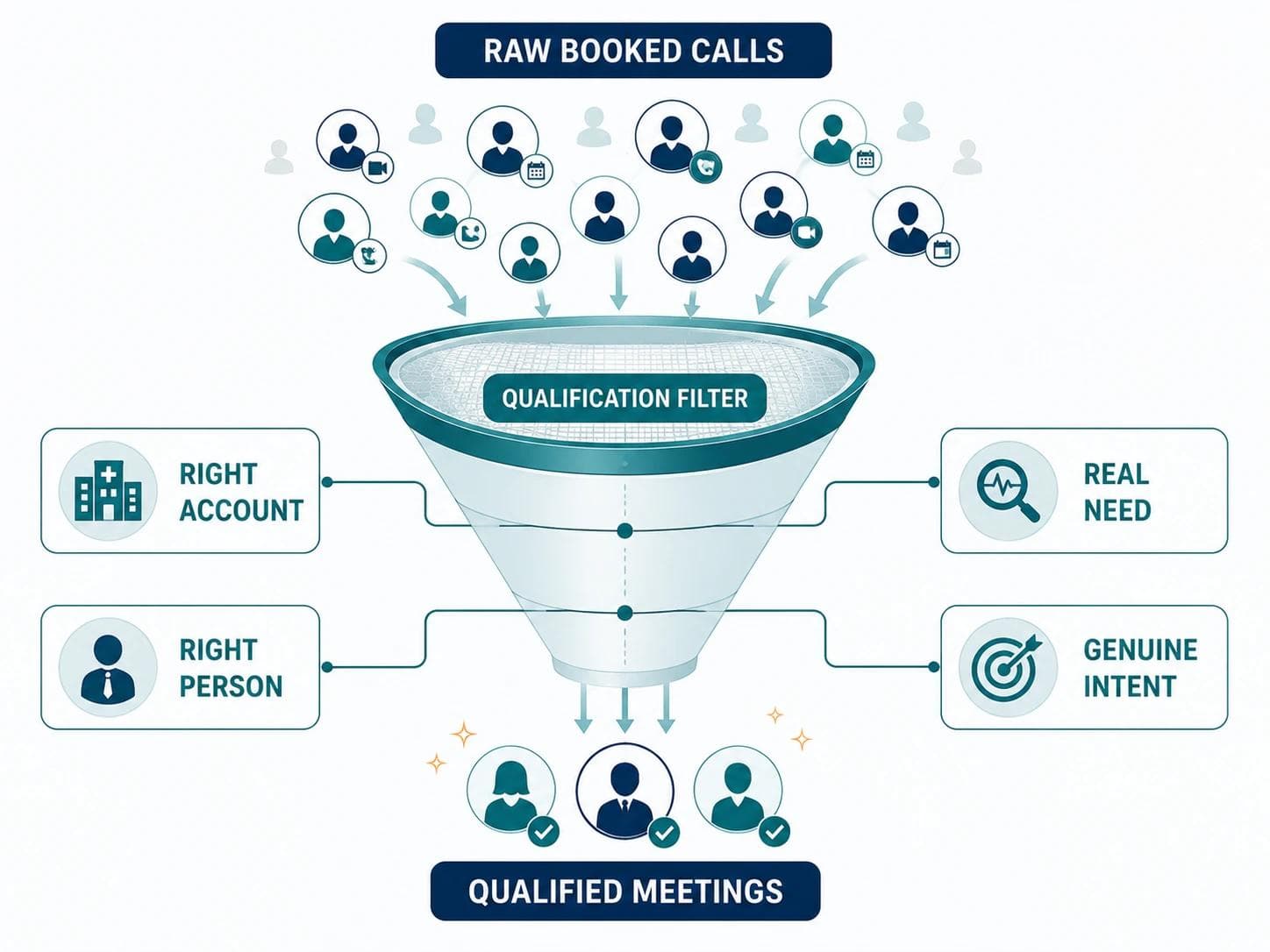
A qualified meeting should clear a bar you set in advance and write down. A workable definition usually includes four things.
- Right account. The organization fits your ideal customer profile by type, size, specialty, and setting. A 3-provider clinic and a 20-hospital system are not the same buyer, and a meeting with the wrong one is not qualified just because it happened.
- Right person. The attendee has a real relationship to the decision. They own the problem, influence the budget, or sit on the committee that will. A curious junior staffer with no line to a decision is a networking call, not a sales meeting.
- Real need and fit. There is an actual problem you solve, acknowledged by the buyer, not assumed by you. The rep confirmed it in the qualifying conversation.
- Genuine intent to talk. The person agreed to a specific time to discuss a specific topic and knows why they took the call. They were not tricked into a "quick chat."
Write your definition down and hold every booked meeting against it. The discipline of a shared, written definition is what keeps an appointment-setting engine honest. When a meeting misses the bar, you can point to the exact criterion it failed, and the function tightens instead of drifting.
One more thing worth saying plainly. A tighter definition means fewer meetings, and that is the point. Ten qualified meetings that map to real buying groups beat forty calls that fill a calendar and nothing else.
In-house versus outsourced: the real tradeoffs
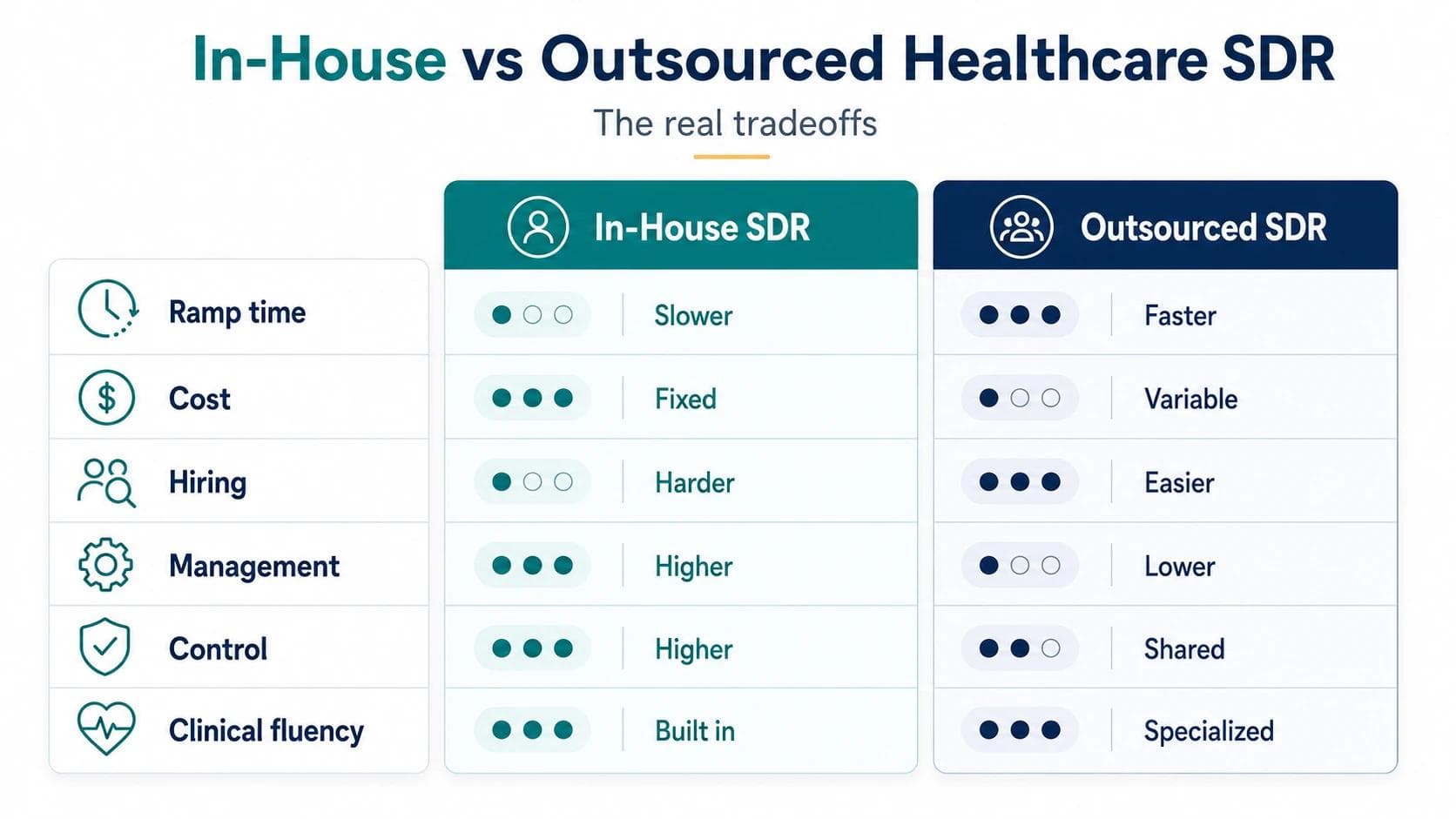
Now the decision most teams are actually facing. Do you build this function inside your company, or bring in a partner who already runs it? Both are legitimate. The honest answer depends on your stage, your budget, and how much healthcare sales muscle you already have.
Building in-house gives you control and a team that lives your product every day. The problem is the path to get there.
The cost and time of building in-house
Hiring healthcare-literate reps is genuinely hard. There is a small pool of people who can both run disciplined outreach and hold a credible clinical conversation, and everyone is fishing in it. We have written before about why it is so hard for startups to find salespeople with healthcare backgrounds, and the same shortage hits sales development even harder, because you often need several reps rather than one.
Then there is ramp. A new SDR does not produce qualified meetings on day one. They have to learn your product, your buyer, your messaging, and the space. In a market with long cycles and cautious buyers, that ramp is measured in months. During that time you are paying salary, benefits, tooling, and the cost of the meetings you are not yet booking.
Management is the quiet cost that sinks most first attempts. Sales development is a coached function. Someone has to write the messaging, review the outreach, run the qualification standard, listen to calls, and adjust week over week. If your founders or your one closer are doing that on top of their real jobs, the function stays mediocre. A team without coaching drifts toward activity for its own sake.
What outsourcing changes
An outsourced healthcare SDR function skips most of the ramp. A good partner already has reps who understand the space, a system for targeting and messaging, and a manager whose job is to keep quality high. You are buying an engine that runs, not a hiring project that might work.
Cost works differently too. Instead of the fixed, long-term cost of full-time hires plus tooling plus management, you pay for a running function you can scale up or down as you learn. That flexibility matters most early, while you are still proving which buyers convert.
The tradeoff is real. An outsourced team is not staring at your product all day, and you give up some direct control. The way you close that gap is with a partner who works as an extension of your team, not a black box, and with a tight qualified-meeting definition that keeps everyone aimed at the same target. For many healthcare and healthtech companies, the right move is to outsource the sales development function first, learn what works, and only build in-house once the motion is proven. Our view on outbound sales for healthcare SaaS walks through how that early motion should be built.
Mid-article CTA
Need help building your healthcare growth engine?
Medix helps healthcare startups, clinics, pharma companies, and provider-focused platforms build scalable commercial pipelines.
Book a Strategy CallWhat good looks like in an outsourced partner
Not all appointment setting is the same, and the healthcare version has a higher bar. When you evaluate a partner, look for these things and treat their absence as a warning.
Clinical fluency. The people doing outreach should understand the buyer's world well enough to earn a conversation. This is Medix Outreach's core reason to exist: real pharmacists and healthcare operators run the outreach, so the message sounds like it came from someone who belongs. That credibility is the single biggest lever in the first touch, and the hardest thing for a generic SDR shop to fake.
Sharp targeting. Good work starts with the right list, so the partner should help define and refine your ideal customer profile, then build named account and contact lists that match it, the same discipline that drives account-based marketing. Spraying a broad list generates volume and no pipeline. Precise targeting generates meetings that convert.
Multichannel outreach that fits the buyer. Providers and administrators live in different places. A strong partner uses email, phone, and channels like LinkedIn in a coordinated way, matched to how each buyer actually responds, rather than leaning on one channel because it is easy.
Messaging built for clinical and economic buyers. The words matter. Messaging has to speak to clinical value and economics without hype, and it has to be tuned by buyer type. A message that lands with a practice administrator will fall flat with a chief medical officer.
Reporting you can act on. You should see qualified meetings booked, the pipeline value behind them, and the leading activity that produced them, not a vanity dashboard of dials. Good reporting lets you steer toward the segments and messages that are working.
A clean handoff to closers. The meeting is a handoff, not a finish line. A good partner briefs your closer on who they are meeting, why the person agreed, and what was discussed, so the sales conversation starts warm. A booked meeting with no context wastes the very thing appointment setting is supposed to protect.
How appointment setting connects to the rest of your GTM
Appointment setting does not work in a vacuum. The meeting is one link in a chain that runs from targeting through messaging to the close. If any link is weak, more outreach will not fix it.
It starts upstream with strategy. Who exactly are you selling to, what do they care about, and what makes your offer worth a meeting? That is positioning and go-to-market work, and it defines everything the SDR function does. Reps cannot book good meetings against a fuzzy ideal customer profile. If you have not yet built the basic machine, our guide to building your first B2B sales funnel is a good place to start.
It runs downstream into the deal. The handoff to your closer, the follow-up between meetings, and the support through a long buying cycle all determine whether booked meetings become revenue. This is why the best outcomes come from a partner who thinks about the whole growth motion, not just the calendar. When targeting, messaging, meeting booking, and deal support are run as one system, each meeting is more likely to move forward. When they are stitched together from separate vendors, meetings stall in the gaps.
You can see the pattern in real work. A credible outreach engine built a nationwide B2B pipeline by targeting the right buyers with the right message, and a psychiatry provider referral engine turned disciplined provider outreach into a steady flow of qualified conversations. In both, the meetings mattered because everything around them was aligned.
Red flags and how to measure success
Before you sign with any appointment-setting partner, watch for the signals that tell you the meetings will be junk.
- They sell dials and activity. If the pitch centers on volume - calls made, emails sent, meetings "set" with no quality bar - walk. Activity is an input, not a result.
- They will not define qualified with you. A partner who resists a written, shared definition of a qualified meeting is protecting their numbers, not your pipeline.
- No healthcare fluency. If the reps cannot hold a credible clinical conversation, they will die at the gatekeeper and damage your name on the way.
- No handoff process. If meetings arrive with no context, your closers inherit cold conversations dressed up as warm ones.
- Opaque reporting. If you cannot see which segments and messages produced results, you cannot steer, and you are flying blind.
Measuring success is the flip side of those flags. Track the things that connect to money. The count of qualified meetings, held against your written definition. The pipeline value those meetings created. The rate at which qualified meetings advance to a real next step and eventually to closed deals. Read those numbers by segment and by message so you learn what is working, not just whether the calendar is full.
Vanity metrics feel good and teach you nothing. Dials, open rates, and raw meeting counts can look healthy while pipeline stays flat. The only scoreboard that matters is qualified meetings that turn into deals, and the honest partner will want to be measured that way.
Where to start
If you need meetings with healthcare buyers and you do not have a proven sales development function, the sequence is straightforward. Write down what a qualified meeting means for your business. Get clear on who you are targeting and why they should care. Then decide, honestly, whether you have the time and healthcare hiring depth to build the function in-house, or whether you are better served by a partner who already runs it and can start producing while you learn.
For most healthcare, healthtech, pharma, and device companies at the pipeline-building stage, the faster and less risky move is to outsource the appointment-setting function, prove the motion, and scale from there. The catch is that the partner has to bring real clinical credibility, sharp targeting, and a clean handoff, because in this market the meeting is a trust event, not a transaction.
That is the work Medix Outreach was built to do. Pharmacist-led outreach that earns credibility with clinical and economic buyers, targeting and messaging tuned to how healthcare actually buys, and qualified meetings handed to your closers ready to move. If you want a full calendar of the right conversations without standing up a team from scratch, book your free growth strategy session and we will map out what a qualified pipeline looks like for your business.
Frequently Asked Questions
What is healthcare appointment setting?
It is the work of booking confirmed meetings between your team and qualified healthcare buyers, such as providers, health-system leaders, or pharma teams. The meeting is the output of targeting, outreach, and qualification done well.
What does a healthcare SDR do?
A sales development rep builds the target list, reaches contacts across channels, handles gatekeepers and first objections, confirms fit, and books qualified meetings for a closer. They start conversations rather than close deals.
Should I hire in-house or outsource healthcare SDRs?
It depends on your stage, budget, and hiring depth. Building in-house gives control but is slow and hard to staff with healthcare-literate reps. Outsourcing skips most of the ramp and flexes with your needs, which suits most teams still proving which buyers convert.
What counts as a qualified meeting?
A meeting that clears a written bar: the right account, the right person with a real relationship to the decision, an acknowledged need you solve, and genuine intent to talk. Meetings that miss any of these fill a calendar without building pipeline.
How much does outsourced healthcare appointment setting cost?
Pricing models vary, so compare on the cost per qualified meeting and the pipeline those meetings create rather than on dials or raw activity. The right benchmark is meetings that advance to real opportunities, not the size of the retainer.