
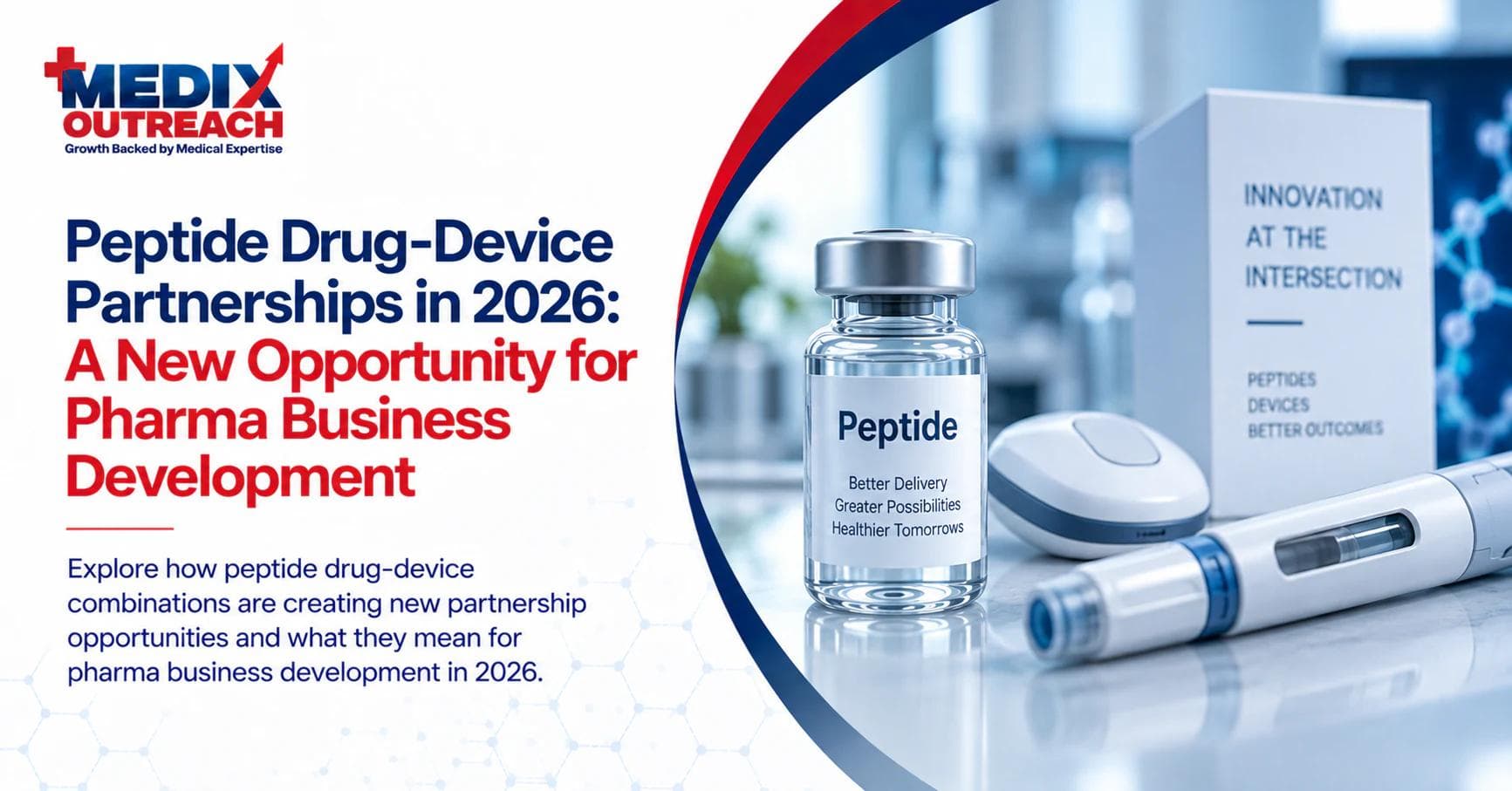
The future of peptide commercialization is not only about the molecule.
It can also involve how the therapy is formulated, delivered, administered, and manufactured.
This is particularly relevant as peptide companies explore oral formulations, injectable delivery systems, and other patient-centered approaches.
FDA's September 2026 workshop on the generic GLP-1 pathway specifically includes drug-device combination products, device quality, device compatibility, user interfaces, and oral peptide formulation development among the topics being discussed.
For pharmaceutical companies, this highlights an increasingly interconnected development ecosystem.
Why delivery is becoming a business development issue
Peptides can present unique delivery challenges.
A 2026 review in the Journal of Controlled Release describes peptide drug development as increasingly focused on formulation, delivery devices, administration routes, and manufacturability alongside traditional molecular considerations.
This creates opportunities for companies beyond traditional peptide manufacturing.
Potential partners may include organizations specializing in:
- Drug delivery
- Formulation
- Devices
- Packaging
- Manufacturing
- Analytical development
- Combination-product development
Oral peptides are expanding the partnership landscape
Oral peptide development is one of the most visible areas of innovation.
Researchers continue to investigate ways to overcome the biological challenges associated with oral peptide delivery.
The commercial implications are significant because a new delivery format can create new requirements across the development process.
A pharmaceutical company developing an oral peptide may need a different network of partners than one developing a conventional injectable product.
What this means for pharma partnership strategy
Partnership strategy should therefore begin earlier.
Companies should ask:
- What capabilities are missing internally?
- Which technologies could accelerate development?
- Which partners have relevant experience?
- Which relationships should be established before late-stage development?
- Which capabilities will be required for commercialization?
The answers can help define the partnership ecosystem around a program.
Mid-article CTA
Need help building your healthcare growth engine?
Medix helps healthcare startups, clinics, pharma companies, and provider-focused platforms build scalable commercial pipelines.
Book a Strategy CallThe opportunity for B2B sales teams
For companies offering peptide-related services, the market opportunity is no longer limited to traditional peptide manufacturers.
A company supporting delivery technology, formulation, device integration, or analytical development can potentially identify peptide programs where its expertise becomes relevant.
That requires better account intelligence.
From product selling to ecosystem selling
A conventional B2B approach might focus on selling one service.
An ecosystem approach focuses on the larger development challenge.
For example:
"How can our delivery technology support the development and commercialization requirements of your peptide program?"
This creates a strategic conversation.
It also gives business development teams more context for understanding the buyer.
Where peptide marketing outreach fits
Peptide marketing outreach can support this process by identifying companies at the right development stage and connecting their current activities to relevant capabilities.
A useful workflow is:
Identify peptide program ↓ Understand delivery approach ↓ Map development stage ↓ Identify potential capability gap ↓ Map decision-makers ↓ Create relevant outreach
This approach can generate conversations based on actual business context.
Why the buyer group may be broader
Drug-device and delivery partnerships can involve multiple stakeholders.
These may include:
- R&D
- Formulation
- CMC
- Manufacturing
- Regulatory
- Procurement
- Business development
- Commercial teams
The outreach strategy therefore needs to account for different priorities across the organization.
Final takeaway
Peptide commercialization is increasingly becoming an ecosystem challenge.
The molecule, formulation, delivery method, manufacturing process, regulatory pathway, and commercial strategy can all interact.
For companies operating across this ecosystem, 2026 presents an opportunity to build more strategic partnerships earlier in the development process.
The strongest pharma partnership strategy will identify those opportunities before the partnership becomes a procurement requirement.