

Urology marketing is different from marketing a cash-pay wellness clinic, because most urology volume still arrives through two channels: referrals from other physicians, and patients actively searching for help with a specific, often urgent condition. A strong urology marketing program tends both, reduces dependence on any single referrer, and turns high-intent condition searches into booked consultations.
This guide covers the referral engine that anchors a urology practice, the condition-driven demand you can capture online, the reputation work that converts it, and the service-line decisions that determine whether growth is profitable.
Start with the referral engine
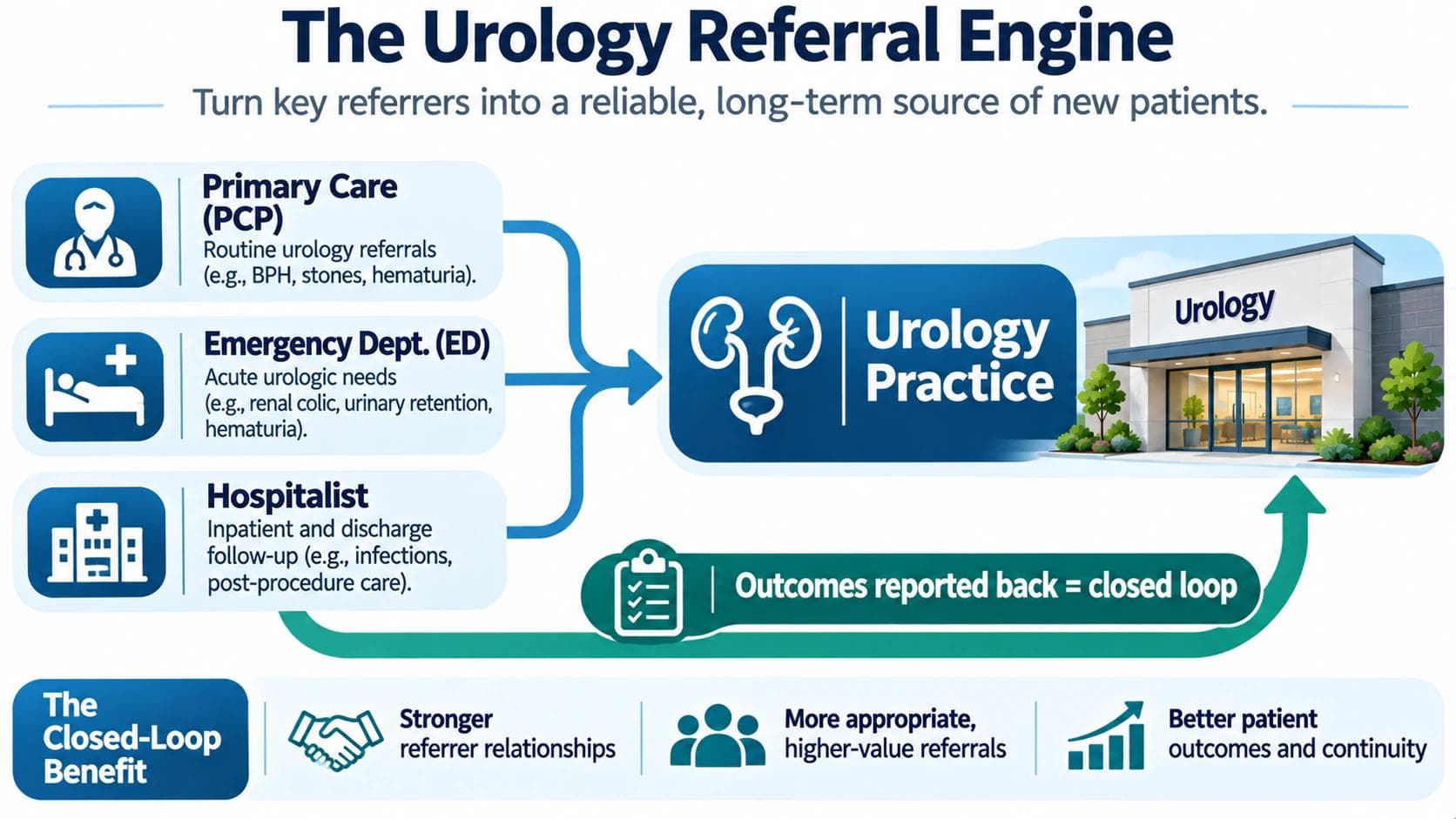
Urology sits downstream of primary care, emergency departments, and hospitalists. A large share of new patients, especially for complex or surgical care, arrives on a referral. That makes referral development the backbone of urology growth.
- Map and prioritize your referrers. Know which primary care groups, EDs, and hospitalists send patients, which could, and which have quietly stopped. Concentration is risk: a practice leaning on a few referrers is exposed to one retirement or one hospital acquisition.
- Run outreach like a program, not a favor. Consistent contact, fast scheduling for referred patients, and timely notes back to the referring physician are what keep referrals flowing. This is the same discipline behind any physician liaison program.
- Close the loop. Referring physicians keep sending patients to the practice that communicates. Reporting outcomes back is the single most reliable retention tactic, and the one most practices neglect, which is also how referral leakage starts.
Capture high-intent condition demand
Urology is unusual among specialties because many patients self-identify and search directly: kidney stones, BPH and urinary symptoms, incontinence, low testosterone, vasectomy, and more. These are high-intent searches by people ready to act, and they can bypass the physician referral entirely.
- Build condition and service-line pages. Clear, credible pages for the conditions and procedures you want more of, answering the questions patients actually ask, earn rankings and increasingly feed AI answers. Credibility matters more here than cleverness; it is earned, not claimed.
- Win local search. An accurate Google Business Profile and real reviews decide which urology practice a searcher chooses. Keep locations, providers, and services accurate per Google's guidelines.
- Match the page to the decision. Procedure searches (for example, vasectomy or stone treatment) convert best with pages that address cost, recovery, and what to expect, not a generic services list.
Reputation converts the demand you create
Whether a patient comes by referral or search, reviews and reputation decide whether they book with you. In a specialty where patients are anxious and the conditions are sensitive, trust signals do real conversion work.
- Generate reviews as a routine across providers and locations, and respond professionally to the difficult ones.
- Keep testimonials and claims honest and substantiated under the FTC's health-products guidance.
Choose service lines deliberately
Not all urology volume is equal. Some service lines are high-margin and patient-searchable; others are referral-dependent and complex. Marketing should follow a deliberate service-line strategy, not chase whatever is easiest to advertise.
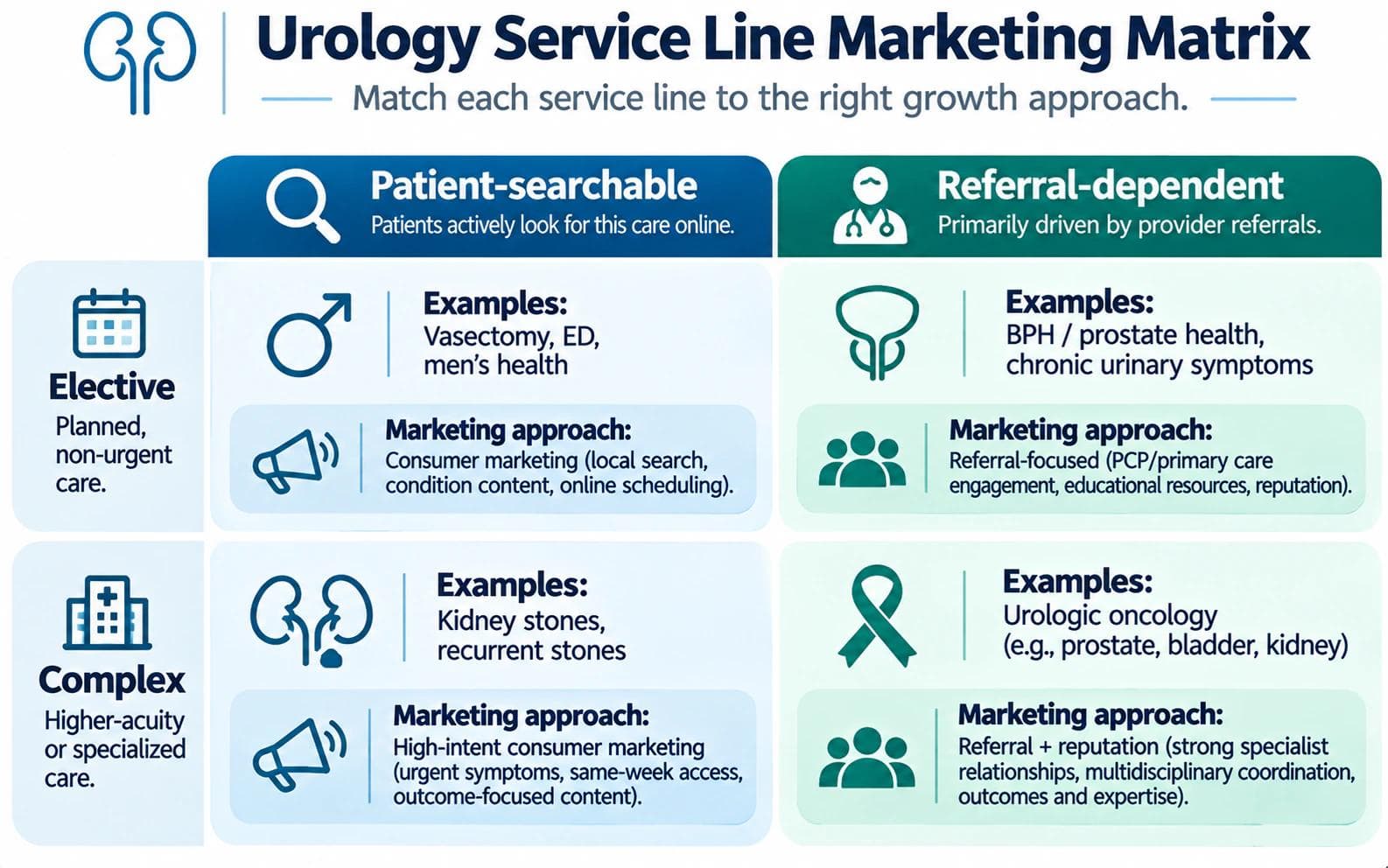
- Patient-searchable, electively scheduled lines (for example, vasectomy or certain men's-health services) respond well to direct consumer marketing and clear procedure pages.
- Referral-dependent, complex lines (oncology, complex stones, reconstruction) grow through physician relationships and reputation, not consumer ads.
- Mind the economics. Reimbursement varies widely across service lines; reference points such as the CMS fee schedules help you weigh where to invest marketing effort.
Mid-article CTA
Need help building your healthcare growth engine?
Medix helps healthcare startups, clinics, pharma companies, and provider-focused platforms build scalable commercial pipelines.
Book a Strategy CallMeasure what matters
- New patients by source (referral vs. self-search) and by service line, so you see concentration and mix.
- Referral volume by referrer, including which relationships are growing or quietly declining.
- Cost per booked consultation by channel for patient-directed lines.
- Reputation metrics (review velocity, rating) per provider and location.
Compliance guardrails
- Keep claims and reviews substantiated under FTC standards; urology procedures invite specific outcome and cost claims that must be accurate.
- Protect patient data in pixels, retargeting, and intake forms per HHS HIPAA guidance.
- Use credible clinical references. Professional sources such as the American Urological Association support accurate condition content.
Frequently asked questions
What is the most effective urology marketing strategy?
Tend both channels. Build and protect the physician-referral engine with liaison outreach and closed-loop communication, and capture high-intent condition searches with credible service-line pages and strong local search. Then let a deliberate service-line strategy decide where to spend.
How do urology practices get more referrals?
Map and prioritize referrers, run outreach as a consistent program, schedule referred patients fast, and report outcomes back to referring physicians. Closing the loop is the most reliable way to keep referrals and prevent leakage.
Does consumer marketing work for urology?
Yes, for patient-searchable, electively scheduled service lines like vasectomy or certain men's-health services. Complex, referral-dependent lines grow through physician relationships and reputation, not consumer ads.
How is urology marketing different from a men's health clinic?
A urology practice is an insured medical specialty built on referrals and procedures across many conditions; a cash-pay men's-health clinic markets a narrow set of elective services directly to consumers. The channels, compliance, and economics differ, so the marketing should too.
Growing a urology practice without over-relying on a few referrers
Urology growth comes from a healthy referral engine, high-intent condition demand captured online, and a service-line strategy that follows the economics. Practices that run referral development as a program, and build credible pages for the conditions they want more of, grow without being hostage to a handful of referrers.
Medix Outreach helps specialty practices build both sides: the provider and referral development that anchors volume, and the patient acquisition that captures searchable demand. See how we built a local referral engine in our psychiatry referral-engine case study.