
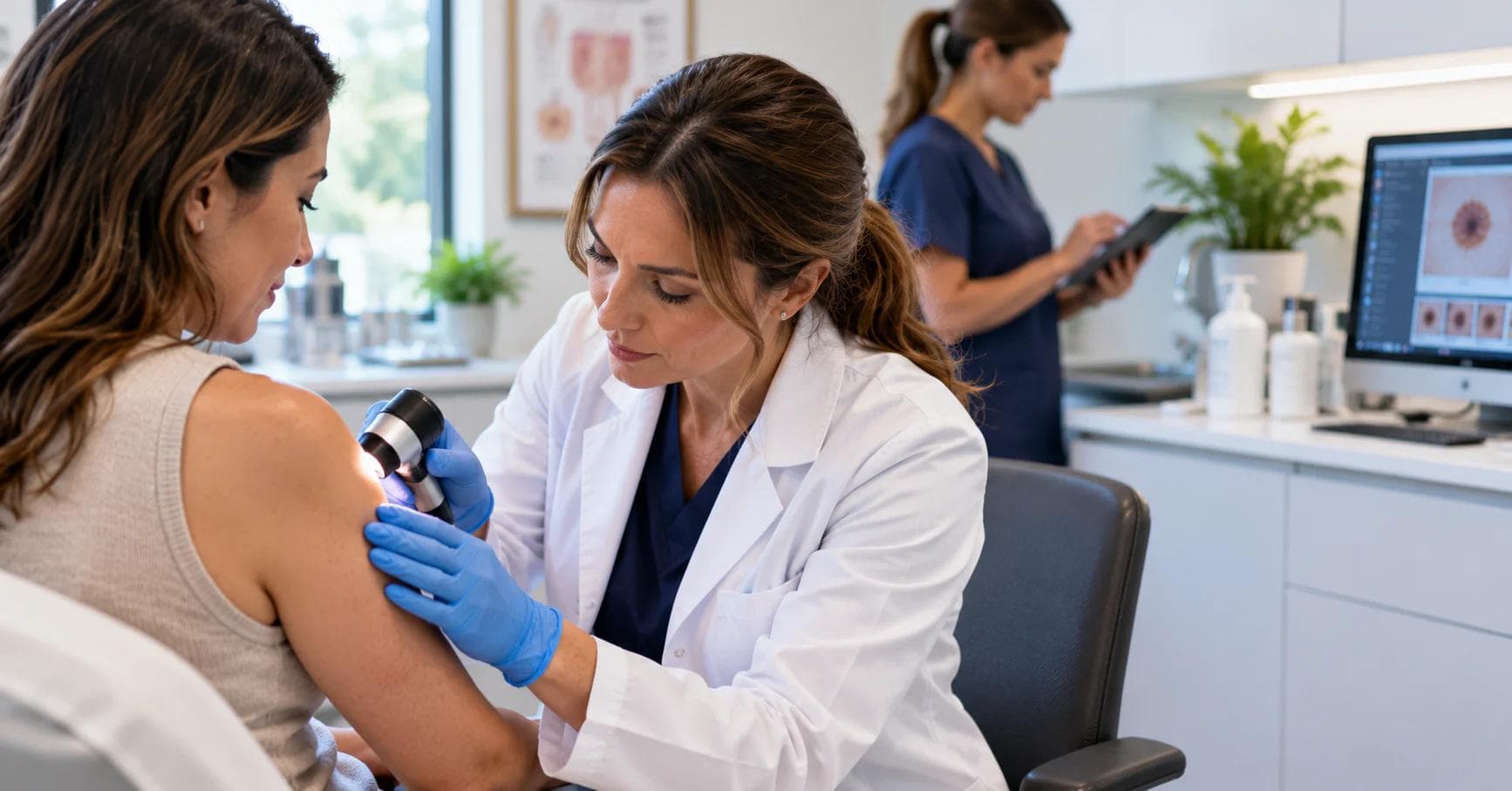
Dermatology has enormous, durable demand and a chronic access problem - and both shape how a practice grows referrals. Skin disease is ubiquitous, skin cancer is the most common cancer in the United States, and yet dermatology wait times are famously long. A dermatology practice grows not by advertising harder but by becoming the place referrers trust to see their patients quickly, triage the urgent ones correctly, and report back - reliably.
This guide covers where dermatology referrals come from, how to capture skin-cancer demand, what referring physicians want, and how to build referral growth within the rules that govern physician referrals.
Where dermatology referrals come from
Dermatology referrals flow from several sources, each needing its own relationship:
- Primary care physicians - the dominant source, for suspicious lesions, chronic skin conditions, and rashes they want a specialist to own.
- Urgent care and emergency departments - for acute presentations and incidental skin findings needing follow-up.
- Other specialists - oncology, rheumatology, transplant, and surgery managing patients with skin involvement or elevated skin-cancer risk.
- Patient self-referral and screenings - community skin checks and direct patient demand, particularly for cosmetic and lesion concerns.
Growth starts with seeing which sources send volume, which are declining, and which should refer but do not - the referral-analytics discipline behind tracking referral sources.
Skin-cancer demand is the engine - capture it
The largest, most durable driver of dermatology volume is skin-cancer evaluation. The American Academy of Dermatology reports that skin cancer is the most common cancer in the US, that about one in five Americans will develop skin cancer in their lifetime, and that roughly 9,500 people are diagnosed every day - see the AAD skin cancer statistics. That creates a steady flow of suspicious-lesion referrals from primary care.
The dermatology practices that grow fastest make it trivially easy for a PCP to refer a suspicious lesion and get it seen quickly, with a clear biopsy-to-pathology-to-plan pathway so nothing at-risk falls through the cracks. Owning the suspicious-lesion pathway in your market is the highest-leverage dermatology referral-growth move there is. (Note: professional guidance does not recommend routine whole-population skin-cancer screening by clinicians; the opportunity here is fast, appropriate evaluation of referred lesions and higher-risk patients, not mass screening claims.)
What referring physicians want from a dermatology practice
- Access. Short waits - especially for suspicious lesions. A weeks-long wait sends the patient (and the referrer) elsewhere.
- Urgent triage. A fast track for lesions that look concerning, so the referrer trusts you with the ones that matter.
- Closed-loop communication. Timely results and a clear plan back in the referrer's workflow - the fix at the heart of reducing referral leakage.
- Full service range. Medical, surgical, and where relevant cosmetic dermatology, so referrers can send the whole patient.
Mid-article CTA
Need help building your healthcare growth engine?
Medix helps healthcare startups, clinics, pharma companies, and provider-focused platforms build scalable commercial pipelines.
Book a Strategy CallBuild a dermatology referral-development program
Sustainable dermatology referral growth is a repeatable system - the same structure Medix applies across specialties such as cardiology referral growth:
- Own the suspicious-lesion pathway - make urgent referrals and the biopsy-to-plan loop effortless for PCPs.
- Segment referrers into grow, protect, and win-back groups by volume and trend.
- Deploy physician liaisons to build relationships and surface friction - see the physician-liaison program guide.
- Remove access and communication friction - scheduling speed, urgent triage, and closed-loop reporting.
- Measure and reallocate based on referral volume and conversion by source.

Grow referrals within Stark and Anti-Kickback rules
Dermatology referral development operates inside strict federal rules. The Physician Self-Referral Law (Stark) restricts referrals for designated health services when a financial relationship exists - see CMS on physician self-referral - and the Anti-Kickback Statute prohibits inducements for referrals of federally reimbursed services, per the OIG fraud and abuse laws. Grow through genuine value - access, the lesion pathway, service, and quality - not inducements, and have counsel review any referral or co-marketing arrangement.
Measure what grows the practice
- Referral volume and trend by source (PCP, urgent care, specialist, self-referral).
- Time-to-appointment for suspicious-lesion vs. routine referrals.
- Suspicious-lesion-to-biopsy and biopsy-to-plan completion (closed loop).
- New referrers activated and lapsed referrers recovered.
Frequently asked questions
How do dermatology practices get more referrals? By mapping and managing referral sources, owning the suspicious-lesion pathway, delivering fast access and urgent triage, closing the loop with referrers, and building relationships through liaisons - all within Stark and Anti-Kickback limits.
Who refers patients to dermatologists? Primarily primary care physicians (for lesions, rashes, and chronic skin conditions), plus urgent care and emergency departments, other specialists managing at-risk patients, and patient self-referral.
What is the biggest dermatology referral-growth mistake? Long waits for suspicious lesions and failing to close the loop - which erodes PCP trust and pushes both patients and referrers to a competitor.
Why is access so important in dermatology? Because demand far exceeds easy supply, wait times are long, and referrers route suspicious lesions to whoever can see them fastest and report back reliably. Access is the primary competitive lever.
Becoming the dermatology practice referrers rely on
Dermatology referral growth is won by capturing skin-cancer and lesion demand, making referral and follow-up effortless, and developing referrer relationships compliantly - all measured rigorously. Practices that build that system turn a large, durable demand stream into predictable growth.
Medix Outreach builds compliant referral-development programs and provider networks for dermatology and other specialty practices. To grow your dermatology referral base, book a free strategy call or explore our Provider Network Development service.