

Fertility clinics grow through two connected engines: referral relationships with OB-GYNs and other providers, and direct patient acquisition built on trust. Fertility care is one of the most personal, high-consideration decisions in medicine - patients often research for months and weigh significant emotional and financial stakes - so growth depends on supporting a long journey with empathy and credibility rather than pushing a transaction. This guide covers the patient journey, the referral base, the digital front door, and the trust that converts.
Fertility acquisition sits at the intersection of provider referrals and consumer healthcare, drawing on both a strong provider referral engine and the digital patient journey.
The fertility patient journey
Understanding the journey is the whole strategy, because each stage has a different patient mindset and a different job for the clinic. Unlike an acute specialty, fertility care unfolds over months and carries rising emotional intensity.
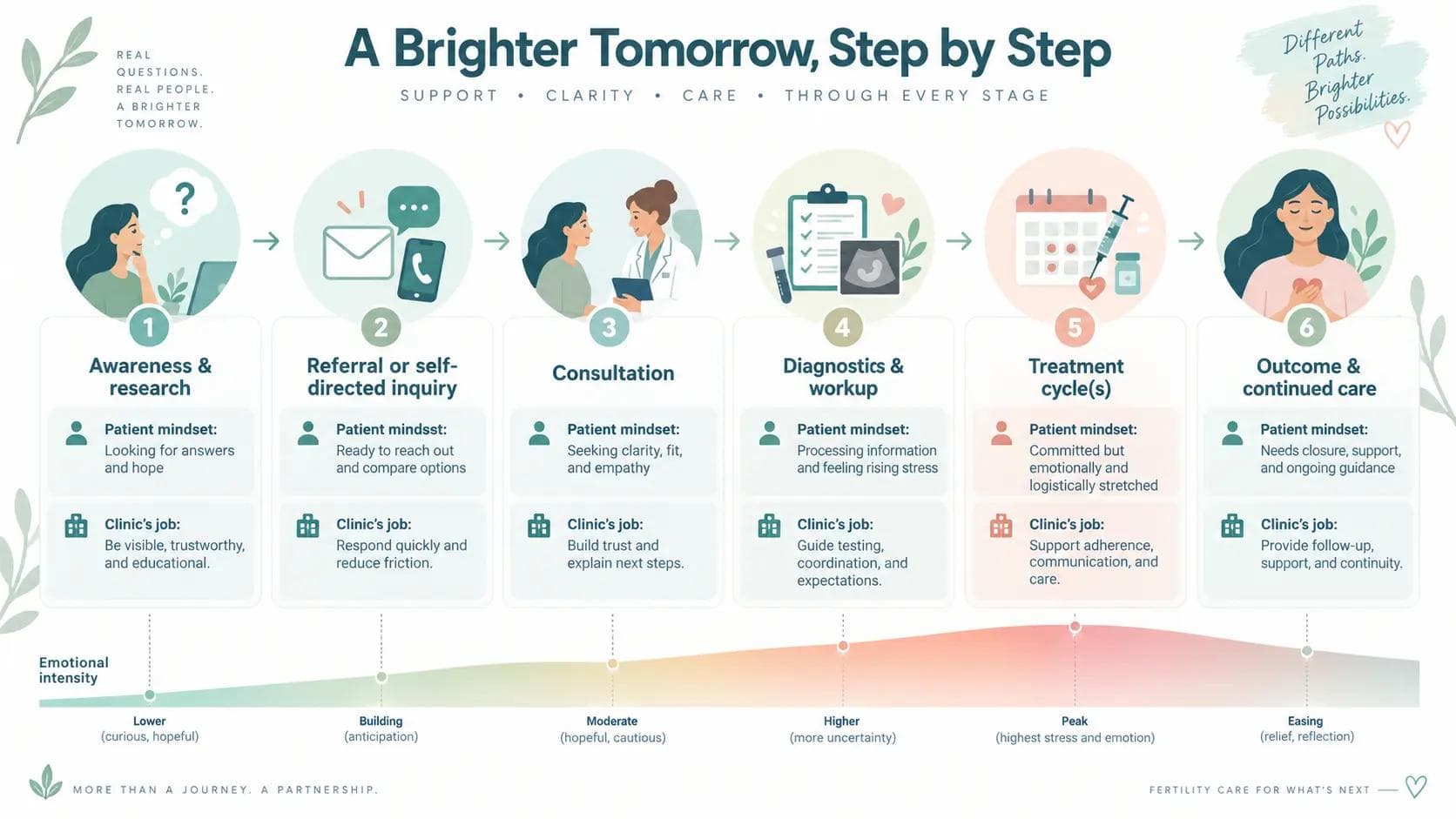
- Awareness and research - the patient suspects a problem and researches privately, often before telling anyone. Your job is to be findable and genuinely helpful.
- Referral or inquiry - they talk to an OB-GYN or reach out directly. Your job is to make the first step easy and low-pressure.
- Consultation - the pivotal trust moment. Your job is clarity, empathy, and a realistic plan.
- Diagnostics and workup - emotional intensity climbs. Your job is communication and support.
- Treatment cycle(s) - the highest-stakes stage. Your job is clinical excellence and steady human support.
- Outcome and continued care - regardless of result, your job is compassion; positive experiences drive powerful word-of-mouth and reviews.
The fertility referral base
Even as patients grow more self-directed, provider referrals remain a foundation:
- OB-GYNs - typically the first provider a patient consults about difficulty conceiving, and the single most important referral relationship. Nurture it the way our guide to women's health referral partnerships describes.
- Primary care - often the first mention of fertility concerns.
- Urologists - for male-factor infertility, an often-underworked referral relationship.
- Oncology - fertility preservation before cancer treatment is a time-sensitive, meaningful referral pathway.
- Endocrinology and other specialists - managing conditions that intersect with fertility.
The referral levers are the familiar ones: fast access, clear communication back to the referring provider, and clinical credibility. What is distinctive is the emotional sensitivity required - referring providers are entrusting you with an intensely personal part of their patient's life.
Mid-article CTA
Need help building your healthcare growth engine?
Medix helps healthcare startups, clinics, pharma companies, and provider-focused platforms build scalable commercial pipelines.
Book a Strategy CallThe digital front door
Because so much of the journey begins with private research, your digital presence is often the first and most important impression. Prospective patients want education, transparency, and a low-pressure way to start:
- Genuinely helpful education about causes, options, and what to expect - meeting patients in the research phase.
- Transparency about process and cost, one of the biggest sources of anxiety and hesitation.
- Honest, compliant success-rate reporting referenced to recognized national ART success-rate data and consistent with reproductive medicine standards - never inflated or cherry-picked.
- Easy first steps - simple consultation booking, a nurse line, or a low-commitment information session.
- Empathetic, dignified tone throughout - the same patient-first posture behind any effective practice growth playbook.
Trust is the conversion engine
Advertising fertility care responsibly
Fertility is a sensitive, high-stakes decision, and irresponsible marketing does real harm as well as regulatory and reputational damage. Responsible growth is also more effective growth:
- Report success rates honestly - use recognized definitions and registry data, and never cherry-pick or imply guarantees.
- Be transparent about cost up front - hidden pricing is a top driver of distrust and drop-off.
- Avoid emotionally manipulative messaging - respect the weight of the decision; empathy converts better than pressure.
- Represent timelines and odds realistically - managing expectations protects patients and your reputation.
- Support, don't sell, in the research phase - education and low-pressure first steps meet patients where they are.
In a decision this personal and this expensive, trust does the converting. Inflated claims, opaque pricing, or a transactional tone do lasting damage; transparency, empathy, and clinical credibility compound into referrals and reviews. Measure the journey - inquiry-to-consult conversion, consult-to-treatment conversion, referral sources, and patient-reported experience - and improve the weakest stage. Medix's Patient Acquisition & Practice Growth team helps fertility and specialty practices build patient journeys and referral relationships grounded in exactly that kind of trust.
Frequently Asked Questions
How do fertility clinics get patients?
Through two connected channels: referrals from OB-GYNs, primary care, urologists, and other providers; and direct patient acquisition, where prospective patients research online and reach out themselves. Successful clinics build both, plus the trust-building content that supports a long consideration period.
Are OB-GYN referrals still important for fertility clinics?
Yes. OB-GYNs remain a primary referral source because they are often the first provider a patient talks to about difficulty conceiving. Strong, communicative relationships with OB-GYNs and their staff are a durable foundation for fertility clinic growth.
Why is the fertility patient journey different from other specialties?
It is longer, more emotionally intense, and more self-directed. Patients often research for months, weigh significant costs, and carry real emotional weight into the decision. Clinics must support that extended, high-consideration journey with education, transparency, and empathy - not a hard sell.
What builds trust with prospective fertility patients?
Transparency about the process and costs, honest and compliant success-rate reporting referenced to recognized registries, empathetic content, real patient support, and easy, low-pressure ways to take the first step. Trust is the currency of fertility patient acquisition.