
For years, behavioral health technology has focused heavily on discovery.
Find a therapist.
Find a psychiatrist.
Search by insurance.
Book an appointment.
But the next generation of behavioral health technology is increasingly focused on something more complicated:
What happens after the referral?
This shift moves the market from simple discovery toward referral infrastructure.
For psychiatry practices, that distinction could become increasingly important.
From directories to referral infrastructure
The behavioral health ecosystem has evolved through several stages.
First came directories.
Then marketplaces added stronger patient discovery and booking capabilities.
Now referral platforms are increasingly addressing the relationship between healthcare organizations and behavioral health providers.
The direction is toward:
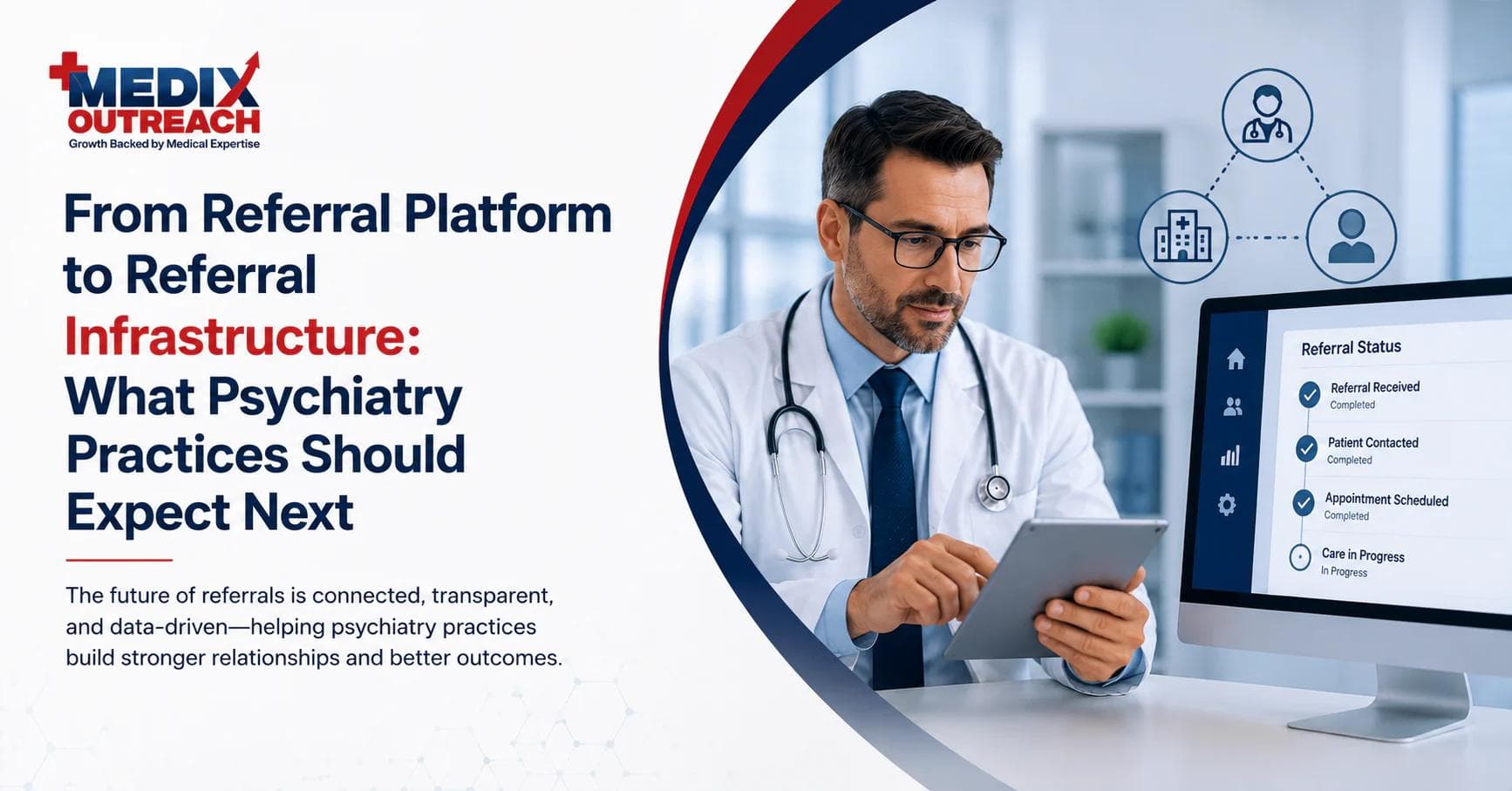
Referral → matching → scheduling → care → communication.
The objective is to make the entire pathway more visible and manageable.
Why the Referral Doesn't End at the Booking
A PCP sends a patient to psychiatry because the patient needs behavioral healthcare.
If the PCP never knows whether the patient received care, the referral pathway remains incomplete.
This is a common problem in healthcare.
Recent platform developments show that behavioral health organizations are responding to it.
In April 2026, a psychiatric provider launched a referral product designed to make referrals easier for primary care providers and provide visibility into patients' care.
In July 2026, another behavioral health provider launched a referral dashboard specifically designed to give referring physicians ongoing visibility into behavioral healthcare.
These developments point toward a broader industry trend.
Referral technology is becoming infrastructure.
What a Behavioral Health Referral Platform Can Do
The capabilities vary by platform, but the direction is increasingly focused on reducing friction across the referral process.
Potential functions include:
- Provider matching
- Insurance matching
- Referral routing
- Availability
- Scheduling
- Referral status
- Care coordination
- Communication
- Referral analytics
The goal isn't simply to produce a patient.
It is to make the relationship between the referring organization and behavioral health provider more functional.
Where Quartet Health Referrals Fit Into the Conversation
Quartet Health is an example of the broader category of behavioral health referral infrastructure that has historically focused on connecting people with appropriate behavioral health care.
But the strategic lesson is bigger than any individual platform.
The market is increasingly moving toward systems that connect behavioral health with the rest of healthcare.
For psychiatry practices, that means the future referral environment may involve more structured relationships with primary care, health plans, and other healthcare organizations.
Why This Matters to Psychiatry Practices
A referral platform can change what makes a psychiatry practice attractive.
In a traditional directory, being listed may be enough.
In a referral infrastructure model, the practice may need to demonstrate:
- Accurate availability
- Clear clinical scope
- Insurance participation
- Reliable intake
- Referral responsiveness
- Appropriate communication
- Capacity to accept referrals
The practice becomes part of an operational network.
Mid-article CTA
Need help building your healthcare growth engine?
Medix helps healthcare startups, clinics, pharma companies, and provider-focused platforms build scalable commercial pipelines.
Book a Strategy CallReferral Data Can Become a Growth Asset
Once referrals are tracked digitally, practices can understand more about their referral network.
They can potentially identify:
- Which organizations refer
- Which referral types convert
- Where patients drop out
- How quickly referrals are scheduled
- Which insurance plans create friction
- Where capacity is limiting growth
This moves referral growth from intuition toward measurable performance.
The Closed-Loop Referral Is the Direction of Travel
A closed-loop referral means the referring provider can know what happened to the referral.
Was it received?
Was the patient scheduled?
Did the patient complete care?
Was the referring provider informed appropriately?
Technology can make these steps easier to track.
This is important because referral relationships depend on confidence.
A PCP is more likely to continue using a behavioral health partner when the process is predictable.
The Platform Is Not the Strategy
Technology can improve referral infrastructure.
It cannot replace the underlying relationship.
A psychiatry practice still needs:
- Appropriate clinical capacity
- Strong provider relationships
- Clear referral criteria
- Reliable intake
- Effective communication
The platform should support those capabilities.
It shouldn't be mistaken for them.
What Psychiatry Practices Should Prepare For
Practices should start thinking about referral infrastructure before they are required to.
That means creating:
Clear referral criteria
PCPs should understand who is appropriate for the practice.
Accurate availability
Referral partners need confidence that patients can actually be scheduled.
Structured intake
Every referral should have a defined next step.
Referral tracking
Practices should know what happens after a referral arrives.
Communication
Referring organizations need appropriate visibility into the patient's care pathway.
The Medix Outreach Perspective
Medix Outreach sees referral growth as both a relationship challenge and an operational challenge.
Mental health referral platforms can create new pathways to patients and healthcare organizations.
But sustainable growth requires psychiatry practices to be ready for the referrals those platforms generate.
That means building the infrastructure behind the relationship.
Conclusion
Behavioral health referral technology is moving beyond simple directories and marketplaces.
The emerging model is more connected:
Referral → matching → scheduling → treatment → communication.
Recent 2026 developments in psychiatric referral technology and referral dashboards demonstrate growing interest in making behavioral health referrals faster and more transparent.
For psychiatry practices, this means referral infrastructure is becoming part of growth strategy.
The practices that prepare early will be better positioned to participate in the next generation of behavioral health referral networks.