

Pharma lead generation is the system for building a pipeline of qualified partner and buyer conversations — for a pharma company seeking licensing or co-development partners, a biotech seeking commercialization help, or a CDMO/CRO seeking sponsors. It looks nothing like ordinary B2B lead generation. The addressable market is small and highly expert, decisions are relationship-driven and committee-based, and timing matters more than volume: reaching the right company the week it needs you beats reaching a hundred that do not. Get the targeting and timing right, and a handful of conversations can be worth more than thousands of generic leads.
This is the execution counterpart to a pharma business development strategy — BD decides which partnerships to pursue; lead generation builds the pipeline of the right ones. This guide covers how.
Why pharma lead generation is different
- A tiny, expert total addressable market. You are not marketing to a broad audience but to a defined set of companies and a few decision-makers at each. Precision beats reach.
- Scientific and regulatory qualification. A "lead" only matters if there is genuine scientific, modality, and regulatory fit. A prospect in the wrong therapeutic area or development stage is not a lead.
- Relationship- and reputation-driven. Credibility and warm introductions carry disproportionate weight. Cold volume without credibility is largely wasted.
- Timing is decisive. Needs are event-driven (below). The same company can be a non-prospect one quarter and an urgent buyer the next.
Define the ICP precisely
Generic targeting fails in a small market. Define the ideal customer profile tightly:
- Company type and stage — e.g., clinical-stage biotech post-Phase-II, specialty pharma seeking pipeline, emerging manufacturer needing capacity.
- Modality and therapeutic area — where your capability or asset actually fits (peptides, biologics, small molecule, cell/gene, a specific indication).
- Role and buying group — the BD lead, the commercial or medical head, the C-suite, and the technical evaluators who will assess fit. Remember these are committee decisions, per Gartner.
A precise ICP is what makes the rest of the system efficient.
Target on pipeline-event triggers
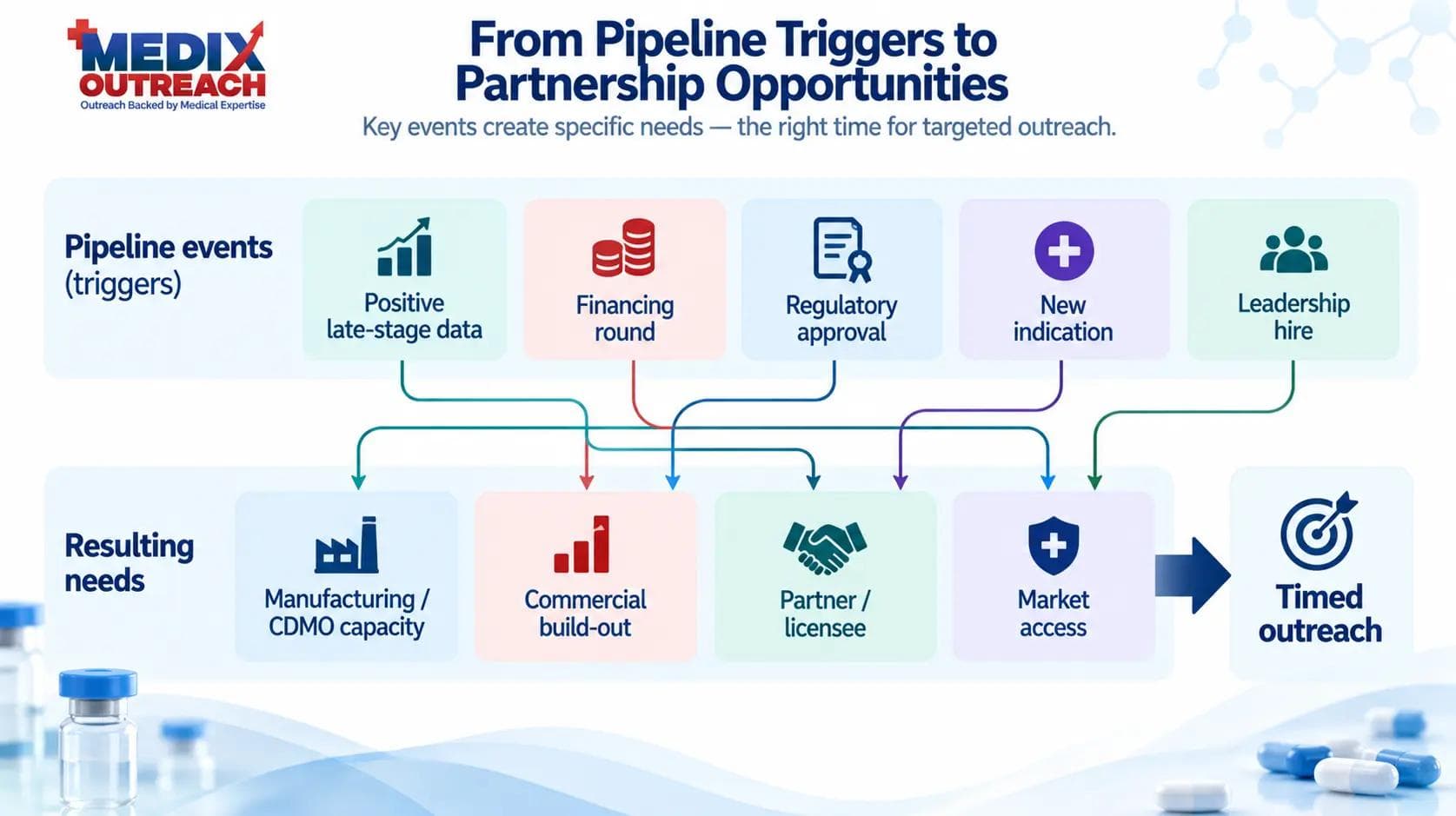
The highest-yield pharma lead generation is trigger-based, because commercial and partnering needs are created by predictable pipeline events. Per the FDA drug development process, a company that just reported positive late-stage data needs manufacturing capacity, commercial planning, and often a partner; a fresh financing round signals capital to spend; an approval signals a commercial build-out. Monitor these signals — clinical readouts, financings, regulatory milestones, leadership hires, and new indications — and reach out when the need is real. With record partnering activity across the industry (Nature), the signals are abundant; the discipline is acting on them promptly and relevantly.
Channels that work
Combine a few, weighted toward credibility:
- Industry conferences and partnering events. Still the backbone of pharma BD — structured partnering meetings and relationship-building where deals begin.
- Targeted, informed outbound. Precise, research-backed outreach to the mapped ICP, referencing the specific trigger and a relevant point of view — not spray-and-pray. This is the discipline behind Medix's peptide B2B pipeline work.
- Thought leadership and content. Credible, expert content builds the reputation that makes outreach land and inbound possible; see peptide marketing outreach.
- Referrals and KOL networks. Warm introductions from respected industry figures convert far better than cold contact.
Note the distinction from demand generation: demand gen builds industry-wide awareness of your capability; lead generation identifies and engages the specific companies ready to act now.
Mid-article CTA
Chasing the wrong pharma prospects?
Medix targets the companies that need you now — by ICP and pipeline-event triggers — and opens the conversation.
Book a Pharma Growth CallQualify on fit, not interest
Interest is cheap; fit is what matters. Qualify each opportunity against:
- Scientific/technical fit — modality, indication, and capability alignment.
- Regulatory and development-stage fit — the need matches where the asset is in development.
- Commercial fit — real budget, authority, and a decision timeline.
- Strategic fit — the partnership actually advances both parties' goals.
A prospect that is excited but a poor fit will consume months and close nothing. Grade honestly.
Compliance and credibility
In a scientific, regulated industry, credibility is everything and it is fragile. Represent capabilities and data accurately, never overpromise, respect confidentiality (much of pharma BD runs under NDA), and handle any data lawfully. One overstated claim to a sophisticated scientific buyer ends the relationship. From a qualified conversation, the path forward is the pharma business development process — diligence, term sheet, and alliance management.
Frequently asked questions
How is pharma lead generation different from other B2B lead gen?
The market is far smaller and more expert, decisions are relationship- and committee-driven, qualification hinges on scientific and regulatory fit, and needs are event-triggered. Precision and timing beat volume.
What are the best triggers for pharma outreach?
Clinical data readouts, financing rounds, regulatory approvals or filings, new indications, and relevant leadership hires — each creates a predictable commercial, manufacturing, or partnering need.
Do conferences still matter for pharma lead generation?
Yes. Structured partnering meetings and relationships built at industry events remain central to how pharma and biotech deals originate.
How many leads should a pharma program expect?
Far fewer than consumer or general B2B — and that is correct. A small number of well-qualified, well-timed conversations with the right companies is the goal, not high lead counts.