
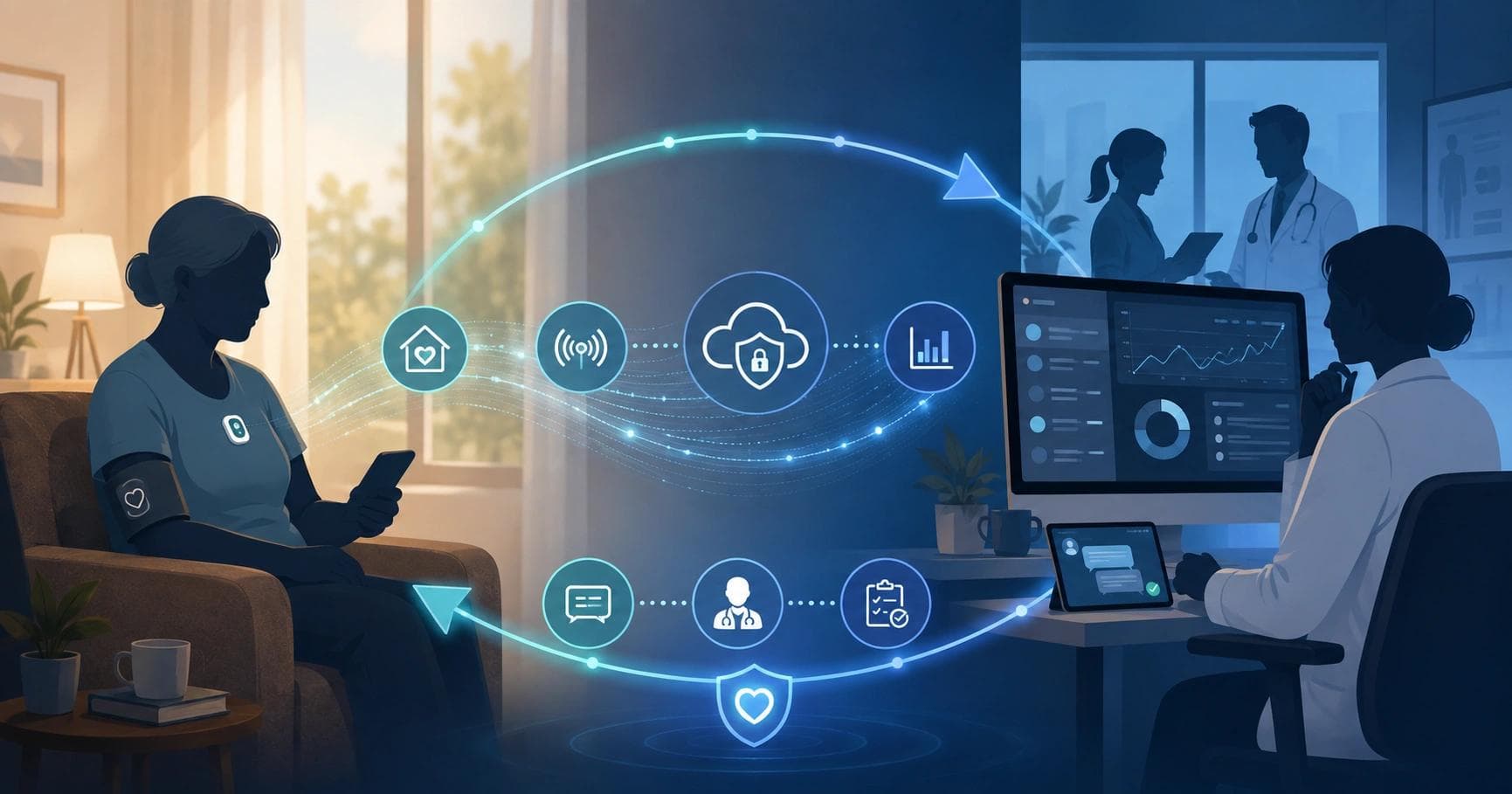
Remote patient monitoring occupies an unusual position in digital health. Most connected-health categories fight for years to prove they deserve to be paid for. RPM already has a defined Medicare reimbursement pathway, which is why practices are interested and why the category is crowded with vendors. That combination changes the commercialization problem entirely. You are not selling a novel idea that needs to earn a payment code. You are competing to be the RPM partner a practice chooses, and to make that partnership actually work once the contract is signed.
The companies that win RPM do not win on hardware. They win on two things: a provider economics story that makes the decision obvious, and an adoption model that gets patients enrolled and keeps them engaged. Everything else is table stakes.
Short version: RPM commercialization is a provider-economics sale, not a device sale. Understand the reimbursement structure, translate it into a clear per-patient contribution for the practice, and pair it with an enrollment and adherence engine that makes the program run. That is what separates the RPM vendors that scale from the ones that get piloted and dropped.
Follow the Reimbursement, Then Look Past It
The reason RPM is commercially viable is that Medicare pays for it through a defined set of CPT codes covering the setup, the monthly device supply and data transmission, and the monthly clinical management time. In practice, RPM billing is built from components such as CPT codes 99453, 99454, 99457, and 99458, and related chronic care management codes often run alongside it. The authoritative source for what is covered and how it changes year to year is the Centers for Medicare & Medicaid Services, and anyone building an RPM business needs current, specific guidance because the rules and rates are revised regularly.
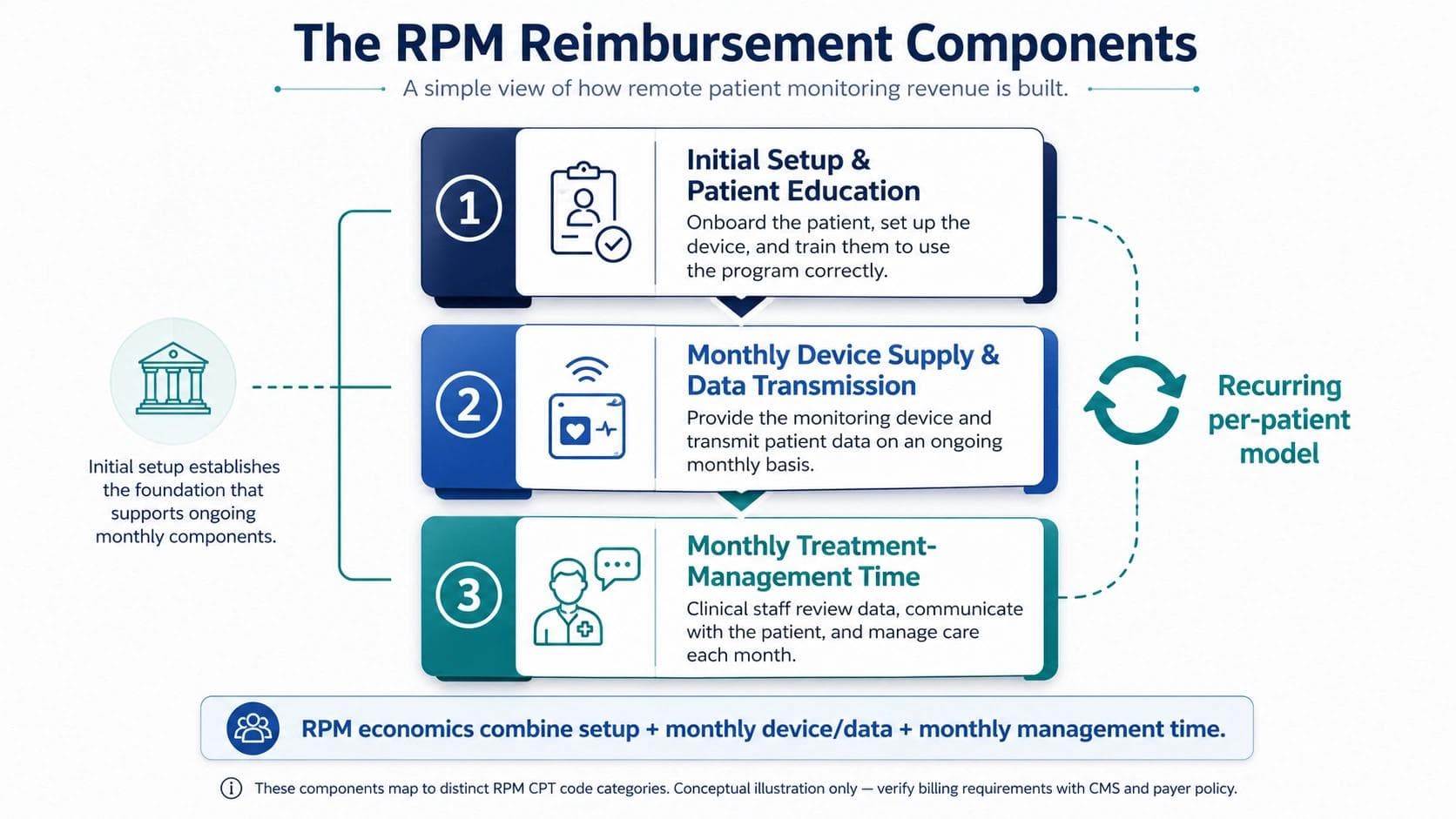
Here is the strategic point that many vendors miss. The reimbursement is what makes the program possible, but reimbursement is not your differentiation, because every competitor bills the same codes. If your entire pitch is "you can bill for this," you are indistinguishable from a dozen other vendors and you will compete on price. The reimbursement is the foundation; the building is the economics and adoption model you put on top of it. Our guide to market access and reimbursement strategy covers the broader discipline, and for RPM the lesson is to treat reimbursement as the starting condition, not the sales argument.
The Provider Economics Story
A practice adopting RPM is making an economic and operational decision. They will ask, sometimes explicitly and sometimes not: does this generate more than it costs, and will it create work my staff cannot handle? Your commercialization has to answer both cleanly.
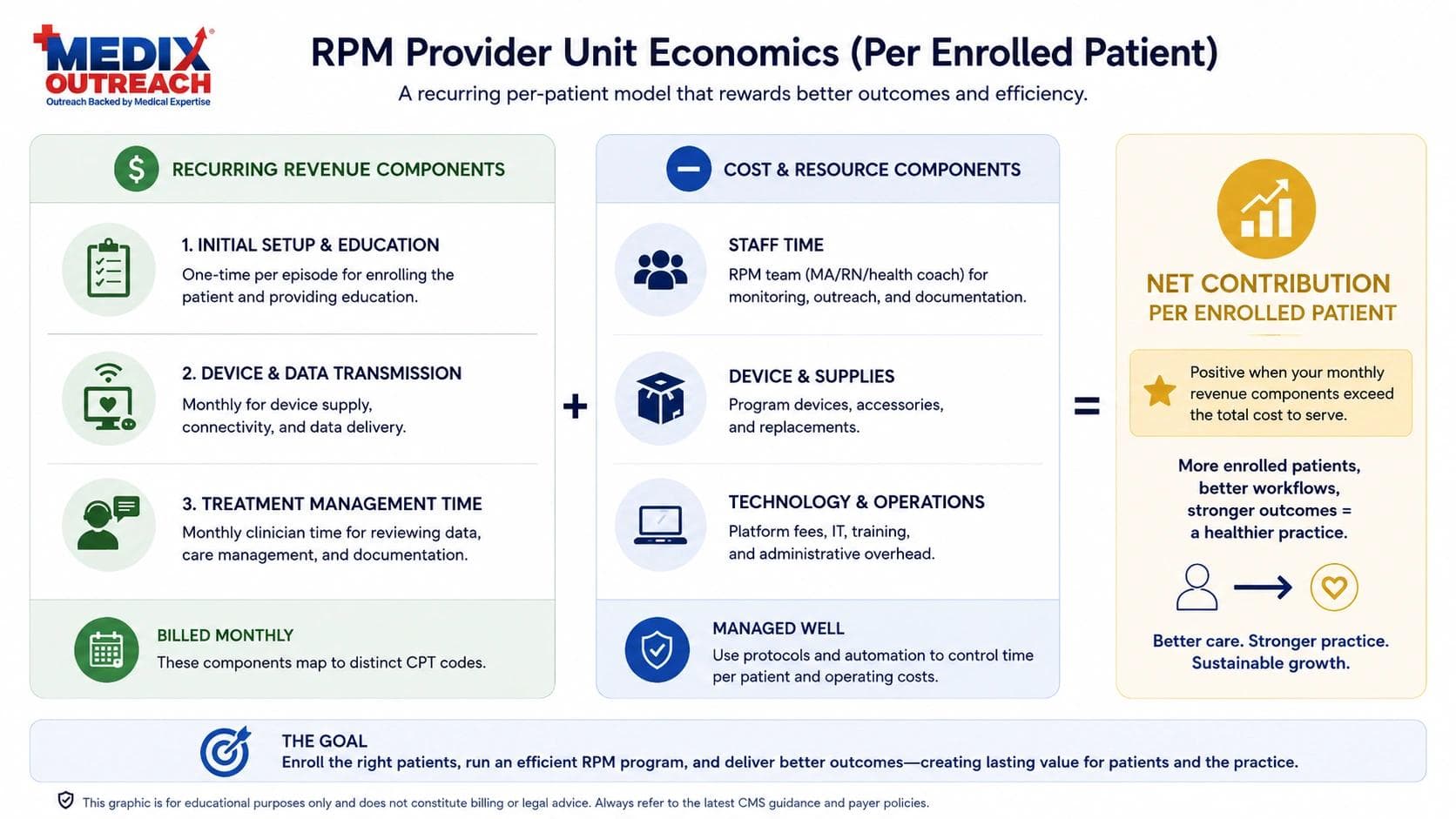
The economics have to be laid out at the level the practice actually cares about: contribution per enrolled patient, net of the staff time and device cost required to deliver the service. A program that generates recurring reimbursement but consumes more nursing time than it funds is a bad deal, and sophisticated practices know it. The vendors that win show a credible model where a reasonably enrolled panel produces a meaningful, recurring, positive contribution, and they back it with a delivery model, whether that is software that minimizes staff time or a service layer that provides the monitoring staff.
This is why RPM increasingly sells as a service or a managed program, not just a device with an app. If the practice has to hire and manage the monitoring staff themselves, adoption stalls on operational burden. If you remove that burden, you become the obvious choice. The same clinical-and-economic framing drives adoption for medical devices generally: buyers adopt when the value story is concrete and the workflow burden is low.
Adoption Is Enrollment and Adherence, Not Just the Sale
Closing the practice is only the first adoption problem. The second, and the one that quietly kills RPM programs, is patient enrollment and adherence. A signed practice that enrolls twelve patients and loses half of them to disengagement in ninety days is not a reference account; it is a churn risk and a bad case study.
Winning RPM companies build an enrollment and engagement engine as part of the product:
- Enrollment workflows that make it easy for the practice to identify eligible patients and get them started without heavy administrative lift.
- Onboarding that drives adherence, because a patient who never sets up the device or stops using it generates no value and no billable service.
- Engagement design that keeps patients transmitting data and responding, which is what sustains both outcomes and reimbursement.
- Clinical escalation paths so that a concerning reading actually reaches someone who acts, which is the entire clinical point of monitoring.
Vendors that treat enrollment and adherence as the practice's problem lose. Vendors that own it become sticky. This is the difference between a pilot and a program, and it is the same trap we describe in escaping pilot purgatory: the pilot succeeds technically and dies operationally because no one built the adoption engine.
Mid-article CTA
Need help building your healthcare growth engine?
Medix helps healthcare startups, clinics, pharma companies, and provider-focused platforms build scalable commercial pipelines.
Book a Strategy CallWho You Sell To, and How
RPM sells into several buyers, and the motion changes with each:
- Independent and small practices are often the fastest early market. The decision-maker is close to the economics, and the sale mirrors selling to clinics and private practices: show the practice-level economics and remove the operational risk.
- Value-based and risk-bearing organizations care about RPM for outcomes and total-cost-of-care, not just fee-for-service billing. Here the argument shifts from billing revenue to reduced admissions and better chronic-disease control.
- Health systems move slower and need integration, committee approval, and IT alignment, closer to a healthcare SaaS enterprise sale.
Sequencing usually favors starting where the economics are cleanest and the decision is fastest, generating reference accounts and real adherence data, then expanding into value-based organizations and health systems with proof in hand. Our work refining provider positioning for faster clinic adoption is an example of getting that provider-level story sharp enough to accelerate the first wave.
What Practices Actually Evaluate in an RPM Partner
If you are on the vendor side, it helps to know exactly what the buyer is weighing, because your commercialization should answer each point before it is raised. Practices evaluating an RPM partner tend to score a few things:
- Net economic contribution, not gross revenue. Will an enrolled panel produce a positive contribution after the staff time and device cost to run it?
- Operational burden. How much of the monitoring, enrollment, and escalation work falls on the practice's own staff versus the vendor?
- Compliance and documentation. Does the program produce the documentation required to bill correctly and defensibly, and does the vendor keep current with changing rules?
- Clinical integration. Does the data flow into the workflow and reach a clinician who acts, or does it sit in a separate portal no one checks?
- Evidence it works. Reference accounts, adherence rates, and outcomes from practices like theirs.
A vendor who leads with clear answers to these questions closes faster and churns less. A vendor who leads with device specifications and billing codes gets compared on price. Frame the entire commercial conversation around the practice's economics and workload, and the RPM sale gets much easier.
Where Medix Fits
Medix Outreach helps remote monitoring and connected-health companies commercialize past the crowded "you can bill for this" pitch. Our healthcare commercial growth and go-to-market work builds the provider-economics narrative, targets and reaches the right practices and value-based organizations, and positions your program around adoption and outcomes rather than hardware. We help you win the practice and set up the enrollment engine that keeps the program alive after the sale.
Frequently Asked Questions
How does remote patient monitoring get reimbursed?
Medicare reimburses RPM through a defined set of CPT codes covering initial setup and patient education, monthly device supply and data transmission, and monthly clinical management time, with related chronic care management codes often billed alongside. Building blocks such as CPT codes 99453, 99454, 99457, and 99458 are commonly used. The specifics and rates change year to year, so current guidance from CMS and qualified billing counsel is essential before building a program on them.
Why is reimbursement not enough to win in RPM?
Because every RPM vendor bills the same codes, so "you can get paid for this" is not a differentiator. If reimbursement is your whole pitch, you compete on price against many similar vendors. Winning depends on a clear provider-economics story - contribution per enrolled patient net of staff time - and an enrollment and adherence engine that makes the program actually run and stick.
What makes a practice say yes to an RPM program?
A practice adopts RPM when the economics are clearly positive at the per-patient level and the operational burden on their staff is low. Programs that generate recurring reimbursement but consume more nursing time than they fund get rejected by sophisticated practices. The vendors that win often deliver RPM as a managed service that removes the staffing and monitoring burden, making the decision easy.
Why do RPM programs fail after launch?
The most common failure is poor patient enrollment and adherence. A practice that enrolls a handful of patients and loses many to disengagement generates little value and no sustained reimbursement. RPM programs that scale build enrollment workflows, onboarding that drives device adoption, engagement design that keeps patients transmitting data, and clinical escalation paths - treating adoption as part of the product, not the practice's problem.
Should you sell RPM to independent practices or health systems first?
Most RPM companies start with independent and small practices, where the economic decision-maker is close to the numbers and the sale is fast, then expand into value-based organizations and health systems once they have reference accounts and real adherence data. Value-based organizations value RPM for outcomes and total cost of care, while health systems need integration and committee approval and move more slowly.