
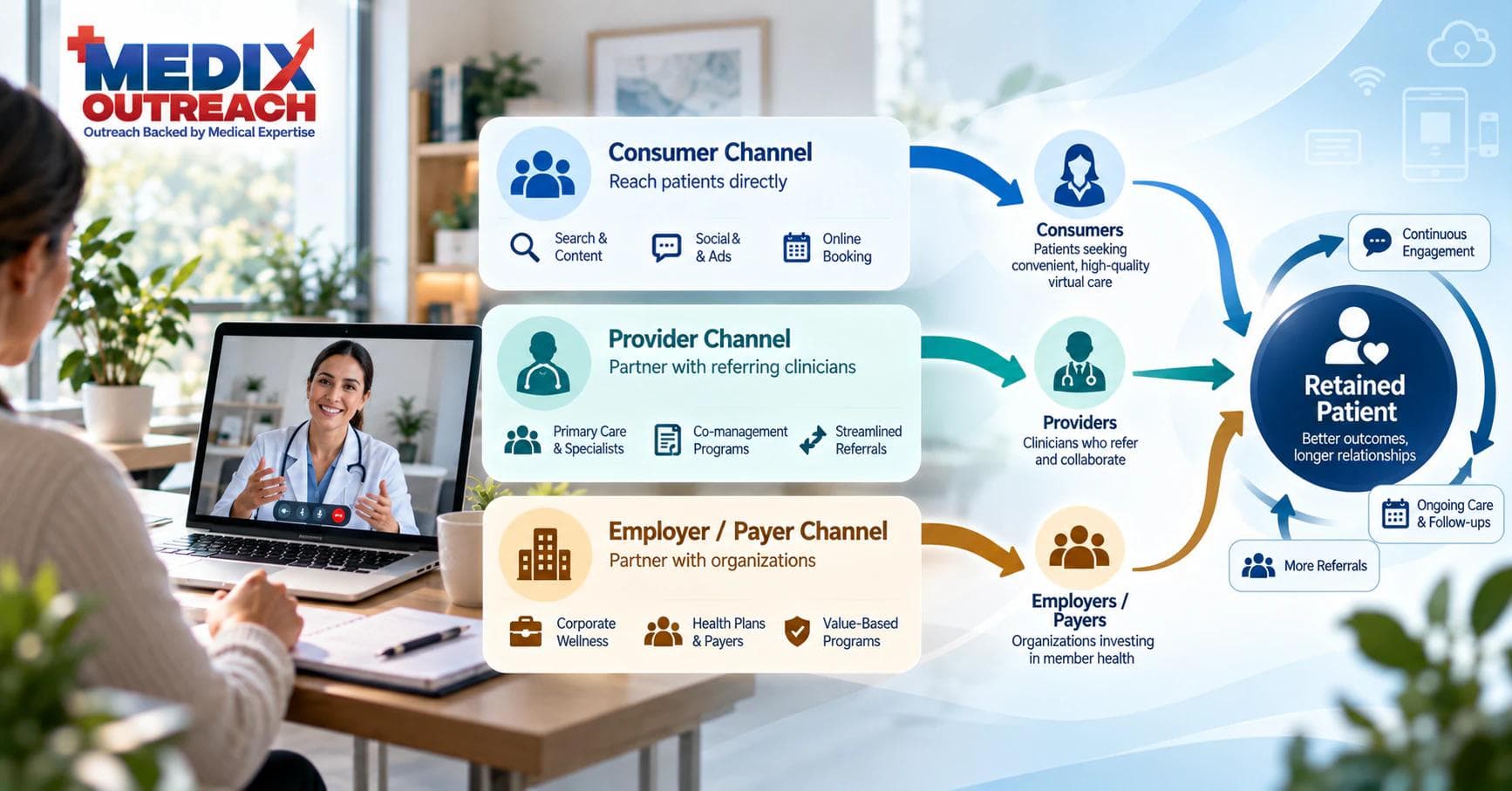
Telehealth made care easier to deliver and much harder to grow profitably. When any patient can switch to a competitor in a single click and every category has venture-funded entrants buying the same keywords, acquisition cost climbs fast and loyalty is thin. The telehealth companies and virtual-care practices that win are not the ones spending the most on ads. They are the ones with the lowest cost to acquire a patient who stays.
This guide covers how to build that: the channels that work for virtual care, the retention mechanics that make the economics sustainable, and the compliance and licensure realities that shape every telehealth campaign.
Why telehealth acquisition economics are brutal
Before tactics, understand the structural pressures that break naive telehealth marketing.
- Low switching costs. Patients can leave as easily as they joined. First-visit acquisition is not the finish line; retention is.
- Expensive, crowded paid channels. Many telehealth categories (mental health, weight loss, men's and women's health) are saturated with well-funded advertisers, so cost per acquisition on paid channels is high and rising.
- Trust and licensure friction. Patients are cautious about receiving care from a screen, and companies must navigate multi-state licensure, telehealth rules, and privacy law — all of which constrain how and where you can market.
The implication: you cannot buy your way to sustainable growth with paid acquisition alone. You need channels that compound and retention that protects lifetime value.
Match the channel to the telehealth model
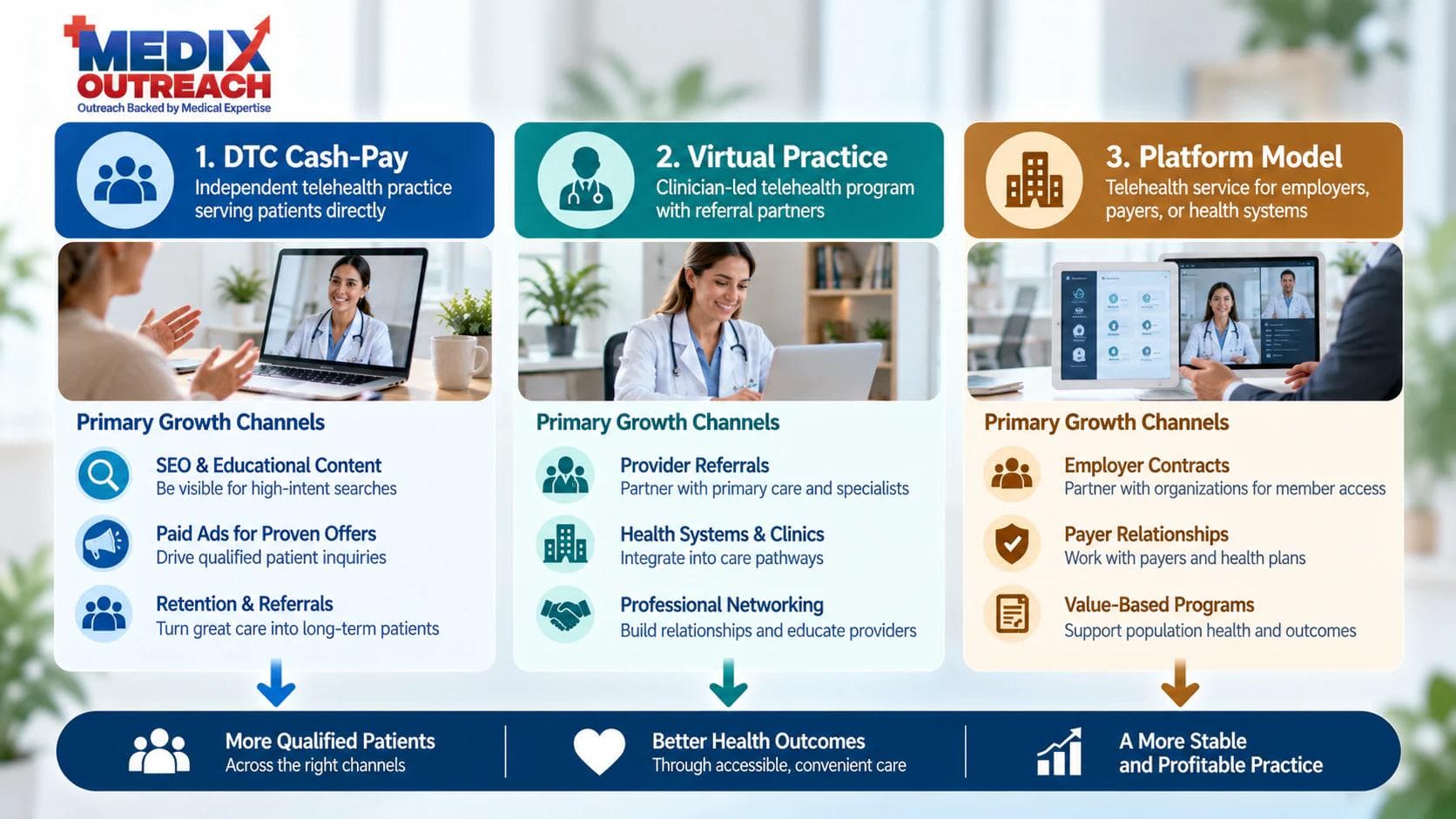
Telehealth is not one business. A cash-pay direct-to-consumer service, an insurance-based virtual practice, and a B2B telehealth platform grow through completely different channels.
Direct-to-consumer (cash-pay) telehealth
- Condition-led content and SEO. Patients research symptoms before they buy. Content that ranks for their questions — and increasingly feeds AI search answers — is the most durable, lowest-cost channel, following the Medix healthcare SEO strategy.
- Paid acquisition for proven offers only. Use paid channels to scale an offer with known unit economics, not to discover whether the model works.
- Retention and reactivation. Subscription design, refill and follow-up flows, and win-back campaigns are where cash-pay telehealth actually makes money.
Provider and referral channels
For virtual practices that want durable, lower-cost growth, referrals from physicians and partner clinics outperform paid traffic. This is the same provider-relationship motion behind provider marketing — earning trust so clinicians route patients to your virtual service.
Employer and payer channels
For telehealth companies, the fastest path to volume is often not consumers at all — it is contracts with employers and health plans that put the service in front of a covered population at once. That is a B2B sale, not a marketing campaign, and it runs on the motions Medix builds through direct-to-employer healthcare sales and healthcare SaaS go-to-market. A single employer contract can outperform months of consumer acquisition.
Mid-article CTA
Need help building your healthcare growth engine?
Medix helps healthcare startups, clinics, pharma companies, and provider-focused platforms build scalable commercial pipelines.
Book a Strategy CallCompliance shapes every telehealth campaign
Telehealth marketing operates inside real constraints, and ignoring them creates legal and operational risk.
- Market only where you can treat. Clinicians must be licensed in the patient's state; target campaigns to states where you can actually deliver care, and align with current CMS telehealth coverage rules where reimbursement applies.
- Protect patient data. Tracking pixels, retargeting, and intake forms touch protected health information; build acquisition on HIPAA-compliant marketing practices.
- Keep claims substantiated. Health claims in telehealth advertising must be truthful and evidence-backed under the FTC's standards.
Retention is the real growth lever
Because switching is easy and acquisition is expensive, the highest-ROI "marketing" in telehealth is often retention. Improving the percentage of patients who return for a second and third visit, or who stay subscribed, moves lifetime value more than any new channel. Practically, that means a frictionless first visit, proactive follow-up, adherence and refill flows, and reactivation of lapsed patients. The Medix guide to the digital patient-acquisition journey covers how the pre- and post-visit experience drives both conversion and retention.
Measure unit economics, not traffic
- Customer acquisition cost (CAC) by channel — and CAC payback period.
- First-visit-to-repeat conversion and subscription retention.
- Lifetime value to CAC ratio — the number that tells you whether to scale a channel.
- Contribution from provider, employer, and payer channels vs. paid consumer acquisition.
Frequently asked questions
What is the best marketing channel for a telehealth company? It depends on the model. Cash-pay direct-to-consumer telehealth grows on condition-led SEO and content plus disciplined paid acquisition and retention; virtual practices grow on provider referrals; and telehealth platforms often grow fastest through employer and payer contracts rather than consumer marketing.
Why is telehealth patient acquisition so expensive? Low switching costs and crowded, well-funded paid channels drive up cost per acquisition. Sustainable growth comes from channels that compound (content, referrals, employer contracts) and from retention that protects lifetime value.
What compliance issues affect telehealth marketing? Clinician licensure limits which states you can market in, HIPAA governs how you can use patient data in tracking and retargeting, and FTC rules require health claims to be truthful and substantiated.
How do telehealth companies grow beyond consumer advertising? By winning employer and health-plan contracts that deliver covered populations at scale, and by building provider referral channels — both B2B motions that typically produce lower acquisition cost than consumer ads.
Growing virtual care that actually pays
Telehealth growth is an economics problem, not a traffic problem. Build channels that compound, respect the licensure and privacy constraints that shape every campaign, and treat retention as your primary growth lever. The companies that get this right acquire patients who stay — and that is the only telehealth growth that survives rising ad costs.
Medix Outreach helps virtual-care practices and telehealth companies build patient-acquisition engines and the provider, employer, and payer channels that scale them. To build a telehealth growth engine, book a free strategy call or explore our Patient Acquisition & Practice Growth service.